

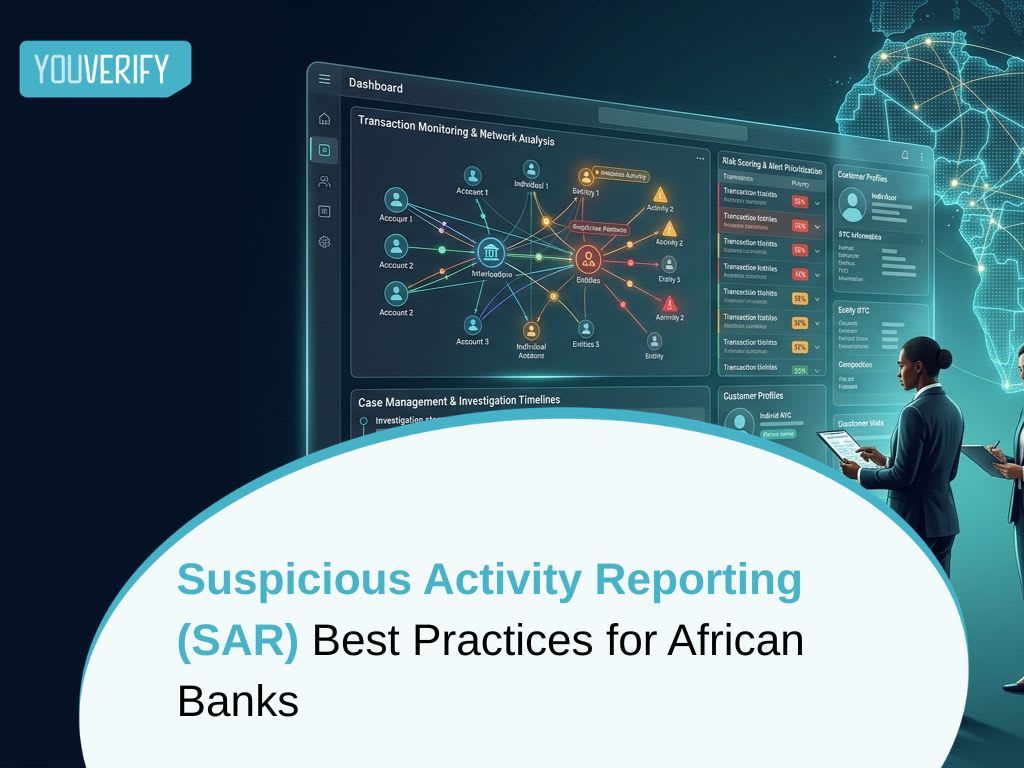
Suspicious Activity Reporting (SAR) Best Practices for African Banks
Key Takeaways
1. A SAR is only as useful as its narrative; a report that lists a transaction amount without explaining why it is suspicious gives the NFIU or FIC little to act on.
2. Nigerian banks must file standard suspicious transaction reports within 7 working days of forming suspicion and terrorism-financing reports within 24 hours, under the Money Laundering (Prevention and Prohibition) Act 2022.
3. A defensible SAR program documents every investigated alert, not only the ones that lead to a filing, and runs a quality-gate review before submission.
Introduction
A SAR filed on time but written without a clear statement of suspicion is close to worthless to a financial intelligence unit. Suspicious activity reporting best practices for African banks mean filing a complete, narrative-rich report inside the regulator's deadline, built on a documented investigation rather than an untested transaction-monitoring alert.
Nigeria and South Africa have both exited the FATF grey list, and regulators are now examining SAR quality as closely as timeliness. This guide sets out the filing deadlines that apply across Nigeria, South Africa, and Kenya; what separates a usable SAR narrative from a low-value one; and how to structure a program that holds up under examination.
SAR Filing Deadlines Across African Markets
Filing windows are set by domestic legislation in each market, so compliance teams operating across borders need to track more than one clock. As a starting reference:
| Jurisdiction | Regulator | Standard STR Deadline | Terrorism-Financing Deadline |
| Nigeria | NFIU, under the MLPA 2022 | 7 working days | 24 hours |
| South Africa | FIC, under FICA | 3 business days | Immediate |
| Kenya | FRC, under POCAMLA | As soon as practicable | Immediate |
These figures reflect the statutory framework at a high level; compliance teams should confirm the exact filing windows against the current text of the MLPA 2022, FICA, and POCAMLA before setting internal escalation timelines.
Read Also: What is Customer Screening and why is it important for AML?
What FATF Recommendation 20 Requires
FATF Recommendation 20 requires financial institutions to report promptly to the FIU when they suspect, or have reasonable grounds to suspect, that funds are proceeds of criminal activity or linked to terrorist financing (see the FATF Recommendations, R.20). The standard is reasonable suspicion, not certainty or proof, and regulators interpret 'promptly' in light of their own statutory deadlines.
What Makes a High-Quality SAR Narrative
1. State the Suspicion, Not Just the Transaction
A narrative that says a customer transferred a large sum to several beneficiaries tells an analyst almost nothing. A narrative that ties the same transfer to the customer's declared turnover, the age of the beneficiary accounts, and a recognized typology gives the FIU something to act on.
Other Quality Factors
1. Contextualise the alert against the customer's declared risk rating and KYC review history
2. Reference a specific FATF typology or a domestic red-flag indicator where one applies
3. Confirm that no tipping off occurred, since alerting the subject is itself an offence under the MLPA 2022, FICA, and POCAMLA
Real-World Scenario
A retail SME with a declared monthly turnover of roughly ₦10 million moved ₦45 million to 17 newly opened accounts within six days. An alert triggered on the amount alone would have been marginal on its own. The SAR became genuinely useful only once the narrative tied the pattern to the customer's declared turnover, the age of the beneficiary accounts, and a recognized mule-account typology.
Interesting READ: What is Biometric KYC for AML Compliance
Common SAR Programme Failures
1. Filing straight from a monitoring alert without a documented investigation
2. Reporting only the transaction that tripped the rule instead of the full suspicious pattern
3. Leaving closed alerts without a documented reason, which examiners sample during review
Building a Defensible SAR Programme
A written SAR policy should define what counts as reasonable suspicion for the bank's risk appetite, set an internal escalation chain from branch to MLRO, and specify retention requirements for the underlying evidence file. Manual workflows built on spreadsheets and email approvals are difficult to audit; a case-management system connected to transaction monitoring keeps the alert, the investigation notes, and the filing decision in one auditable record.
Conclusion
SAR quality is now a defining metric in AML/CFT examinations across Nigeria, South Africa, and Kenya. A report that is timely but narrative-thin does little for the NFIU or FIC. A bank that pairs a documented investigation process with a quality-gate review produces filings that actually advance financial intelligence work, on top of meeting the SAR best practices regulators expect from African banks in 2026.
See how Youverify's transaction monitoring solution connects alert investigation to filing, or read the complete guide to transaction monitoring for a deeper look at the workflow. To get started, book a free demo today.
About the Author
Victoria Okere is a compliance writer at Youverify specializing in AML/CFT regulations across Nigeria, South Africa, and Kenya, covering CBN, FICA, POCAMLA, and FATF frameworks.
Frequently Asked Questions
Related Articles
Why is Negative News Screening (NNS) Important?
What is a Sanctions List?
