
ID Verification in Kenya: How to Check Your ID Status Online in Kenya
Key Takeaways
1. You can check your ID status online in Kenya through the eCitizen portal or by sending your waiting card serial number via SMS to the official Huduma short code.
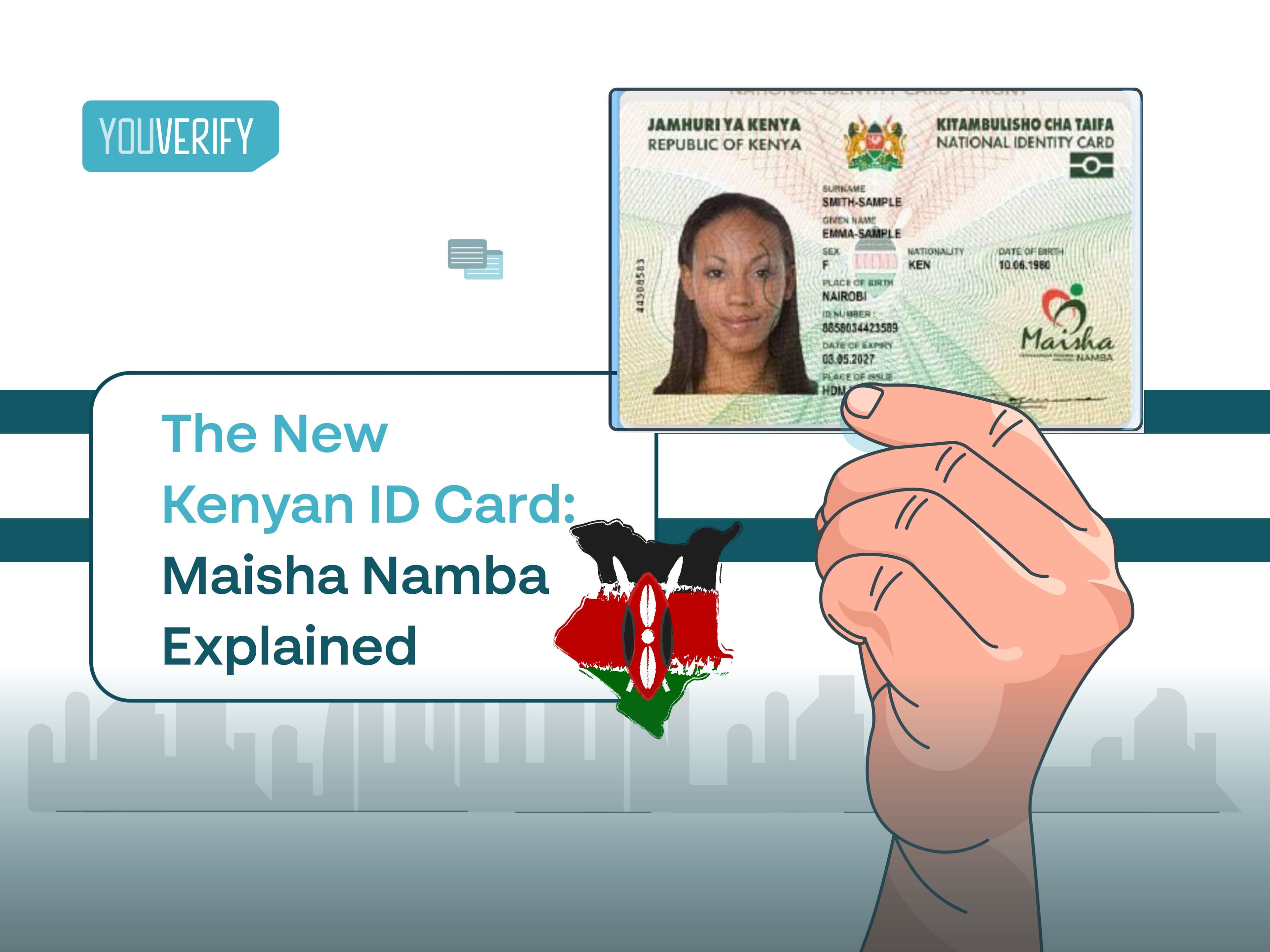
2. Kenya's identity system is transitioning to the Maisha Card and Maisha Namba, which replaced the paused Huduma Namba/NIIMS rollout after August 2024
3. If your ID is lost, stolen, or damaged, you'll need to apply for an ID replacement separately; this is a different process from checking the status of a new ID application.
How to Check Your ID Status Online in Kenya (2026 Update)
To check your ID status online in Kenya, send the 9-digit serial number on your waiting card by SMS to 20031, or enter the same serial number on the National ID status portal at identity.go.ke/search. Both methods tell you whether your ID card is still processing or ready for collection. SMS is the most reliable option, because the online portal is sometimes unavailable.
Quick Answer: Check Your ID Status in Kenya
By SMS (most reliable):
- Open a new text message.
- Type only the 9-digit serial number printed on your waiting card.
- Send it to 20031.
- You receive a reply from 20031 with your ID status.
The SMS costs about KES 5, and the reply can occasionally take up to a few days during busy periods. If it delays, resend the same serial number.
Online:
- Go to identity.go.ke/search.
- Open the National ID section.
- Select Status.
- Enter your 9-digit waiting card serial number.
- Submit to view your status.
If the online portal does not load or returns nothing, use the SMS method instead. Portal availability has been inconsistent, and SMS to 20031 is the method that works most consistently.
Where to Find Your Waiting Card Serial Number
You cannot check your ID status without your waiting card serial number, so this is the first thing to locate.
The waiting card is the paper slip issued to you at the Huduma Centre or National Registration Bureau (NRB) office immediately after your fingerprints and photo were captured. Printed on it is a unique 9-digit serial number tied to your application. That number is what both the SMS service and the online portal use to look up your status. Keep the waiting card safe and dry: it is your only proof of a pending application, and you must surrender it when you collect your finished ID.
If you have lost your waiting card, you will need to visit the Huduma Centre or NRB office where you applied to retrieve your serial number, as it is not recoverable by name online.
How to Check ID Status in Kenya by SMS
The SMS method works on any phone, needs no internet, and is the method most Kenyans rely on because it does not depend on the portal being online.
- Create a new text message.
- Type only your 9-digit waiting card serial number, with no extra words.
- Send the message to 20031.
- Wait for the reply from 20031, which states whether your ID is still being processed or is ready for collection.
Keep at least KES 5 of airtime on your line. If you do not get a reply immediately, the system is sometimes slow, so wait and resend the same serial number after a while.
Maisha Namba and the Maisha Card: What Changed in Kenya's ID System "Since 2024
Kenya’s digital identity program is transitioning from the older second-generation national ID system toward the Maisha ecosystem, which includes Maisha Namba, a lifelong unique personal identifier, and the chip-enabled Maisha Card. The program faced court challenges and delays, and reporting in 2024 indicates the rollout moved forward again after legal hurdles were cleared.
How to Check ID Status Online in Kenya
If you prefer to check on a browser, use the National ID status portal.
- Visit identity.go.ke/search.
- Click into the National ID section.
- Select Status.
- Enter the 9-digit serial number from your waiting card.
- Submit to see whether your ID is ready.
One honest caveat: the online national ID search portal is not always available, and at times it has been down for extended periods. If the page fails to load or returns no result, this is a known issue with the portal rather than a problem with your application. Fall back to the SMS method to 20031, which is more consistently available.
How to Check If Your ID Is Ready for Collection
Both the SMS and online methods return one of two outcomes. Either your ID is still being processed, or it is ready for collection.
Once the status shows ready, collect your ID from the same office where you applied, whether that is a Huduma Centre, the National Registration Bureau, or your local Chief's or District Officer's (DO's) office. Bring your waiting card, because you must hand it over to receive your ID. First-time IDs are free to collect.
If weeks have passed and your status has not changed, it is worth visiting the office in person. Occasionally a card is ready but the status has not updated, and staff can confirm on the spot.
How Long Does It Take to Get a National ID in Kenya?
For most first-time applicants, a Kenyan national ID takes roughly two to four weeks to process after biometric capture, though official guidance sometimes quotes about 10 working days. The actual wait depends on application volumes and how quickly cards are printed and distributed to collection points.
Because timelines vary, the practical approach is to start checking your status by SMS to 20031 about two weeks after your biometrics were taken, then check every few days until it shows ready.
Checking Your ID Status at the Chief's or DO's Office
Before SMS and online checks existed, the only way to check an ID status was to visit the local Chief's or District Officer's office in person. This method still works and remains useful in rural areas with limited network coverage.
Bring your waiting card to the office, and staff can look up whether your ID has arrived for collection. For most people, though, the SMS method to 20031 is faster and avoids the trip.
What If Your ID Was Lost, Stolen, or Damaged?
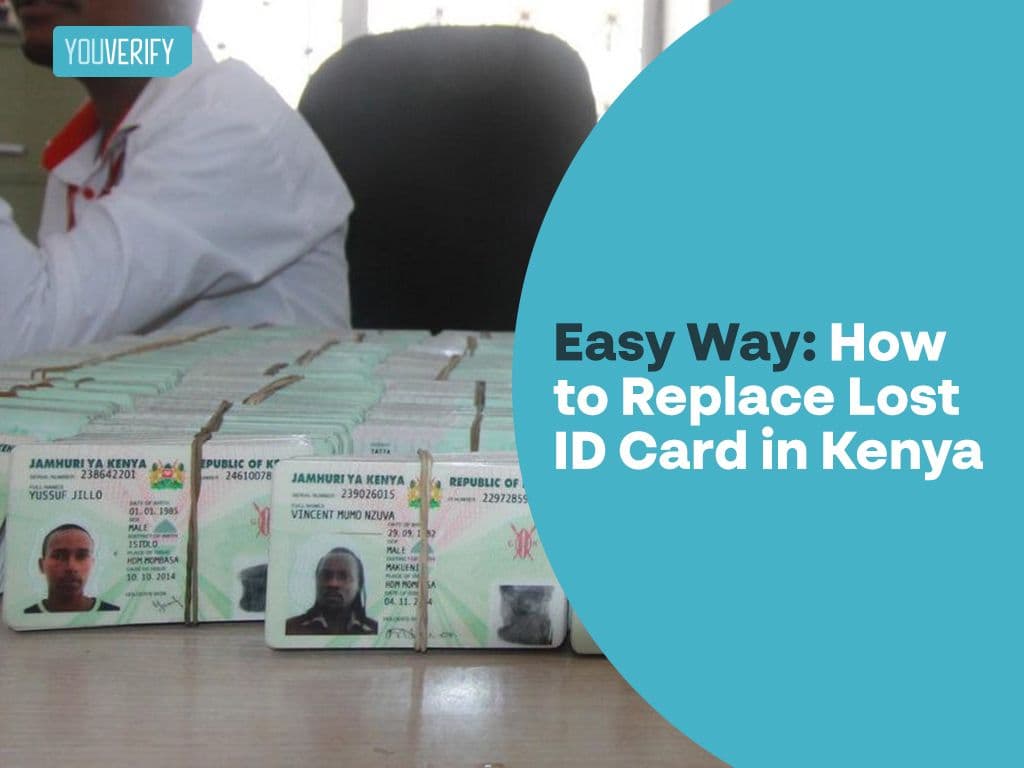
The steps above are for checking a new ID application. If your existing ID was lost, stolen, or damaged, that is a different process called ID replacement, handled through the National Registration Bureau and the eCitizen portal, and it involves a police abstract and a separate fee.
For the full replacement process, see our dedicated guide on how to replace a lost or damaged ID card in Kenya.
How to Do a Kenyan ID Number Check
A Kenyan ID number check confirms that an ID number is valid and matches the person presenting it, by checking it against the government's population register. This is different from checking your ID application status, which tracks a pending card.
For individuals, your own ID details sit in your eCitizen profile once your ID is issued. For businesses, verifying a customer's ID number is done against the Integrated Population Registration System (IPRS), explained below, usually through a licensed verification provider rather than manually.
Identity verification in Kenya has become increasingly important as more businesses shift towards online transactions and remote operations in Kenya, making it essential to have a reliable way to verify identities. For instance, many organizations now recommend a Kenyan ID number check before proceeding with any transaction. Also, digital commerce in Kenya is expected to grow annually between 13% and 16.4%, anticipating a market worth over $1 billion by 2029, driving demand for robust digital ID.
Quick Answer: How to Check Your ID Status Online in Kenya
If you simply want to check my ID status online in Kenya right now, here's the fastest way:
- Visit the official eCitizen ID status portal.
- Go to the "National ID" section.
- Enter your waiting card serial number.
- Click "Submit" to view your status.
Alternatively, send your serial number via SMS to the official Huduma short code.
Kenya, like many other countries, has established regulations and protocols to ensure that individuals and businesses can authenticate their identities for legal and compliance reasons. In this blog post, we will explore the ID verification landscape in Kenya, including IPRD ID verification in Kenya, and some FAQs, such as how to check ID verification status in Kenya. Additionally, some services even offer a search ID number name in Kenya feature to assist users who may not have their ID number readily available.
What is ID Verification in Kenya?
Id verification in Kenya refers to the process of confirming the identity of an individual by verifying their personal information against the Kenyan government's official records and databases. The process is usually carried out by government agencies, financial institutions, and other organizations that require proof of identity from their clients or customers.
In Kenya, the government has put in place various measures and systems for ID verification, including the National Integrated Identity Management System (NIIMS), commonly known as Huduma Namba, which is a unique identification number that is assigned to all Kenyan citizens and residents. This system collects biometric and personal information from individuals, such as fingerprints and facial recognition, ensuring a thorough Kenyan ID number search when needed.
Financial institutions in Kenya also use identity verification systems to comply with the Know Your Customer (KYC) regulations. KYC requires that banks and other financial institutions verify the identity of their customers before providing them with services or products.
In summary, id verification in Kenya involves verifying an individual's personal information against official records to ensure that they are who they claim to be. The process is used by various organizations for different purposes, including government programs, financial transactions, and access to various services.
What is IPRS ID Verification Kenya?
The Integrated Population Registration System (IPRS) in Kenya is a computerized database that collects and stores demographic data on Kenyan citizens and residents. It is used to maintain a comprehensive record of the population of Kenya, which includes personal identification details, biometric data, and other relevant information. This system serves as a robust IPRS ID verification Kenya tool.
The IPRS is managed by the National Registration Bureau (NRB), which is a government agency under the Ministry of Interior and Coordination of National Government. The system is designed to provide a unique identification number to every citizen and resident in Kenya and is used for various government programs and services, such as voter registration, census taking, social services provision, and identity verification. In essence, the IPRS also functions as an effective IPRS checker for verifying identities across different sectors.
What is the use of IPRS ID Verification Kenya?
The Integrated Population Registration System (IPRS) in Kenya is used for identity verification purposes by various organizations, including government agencies, financial institutions, and other private entities. The system collects and stores personal identification details and biometric data of Kenyan citizens and residents, which can be used to verify an individual's identity.
The use of IPRS id verification in Kenya is aimed at reducing the risk of identity fraud and improving security. The system enables organizations to confirm that the personal details provided by an individual match those in the government's database, making it easier to verify the identity of individuals. For example, financial institutions in Kenya use the IPRS for KYC compliance, which requires them to verify the identity of their customers before providing them with services or products. This process essentially performs an ID number check online that is both quick and efficient.
For example, financial institutions in Kenya use the IPRS for Know Your Customer (KYC) compliance, which requires them to verify the identity of their customers before providing them with services or products. The IPRS ID verification in Kenya is used to confirm the identity of individuals and to ensure that they are who they claim to be. This helps to prevent identity theft and other forms of financial fraud.
The IPRS is also used for voter registration in Kenya. During the voter registration process, the IPRS is used to verify the identity of individuals and ensure that only eligible voters are registered. This helps to prevent electoral fraud and to ensure the integrity of the electoral process.
In summary, the use of the Integrated Population Registration System (IPRS) in Kenya for identity verification purposes is aimed at reducing the risk of identity fraud and improving security. The system is widely used by various organizations to verify the identity of individuals, including financial institutions, government agencies, and electoral bodies.
Related: Benefits of Business Identity Verification for Kenyan Startups
ID Verification Methods for Businesses in Kenya?
An accurate and secure ID verification in Kenya is important for businesses, government agencies, banks, fintech, and the payment industry. There are several methods commonly used to verify customers' identities, which include:
1. Document Verification
Document verification is the process of checking or verifying the authenticity of identity documents such as national IDs, driver's licenses or passports. Today, technologies such as MRZ (machine-readable zone), is used to extract and match data on documents against the government database to confirm validity. In Kenya, it is one of the most commonly used methods of ID verification in basic KYC processes.
2. Government Data Sources
Customer ID Verification in Kenya can also be carried out by directly verifying the details on the government database, a process known as government KYC check. Examples of documents commonly verified from the government databases in Kenya may include:
i. National ID:
The national ID card in Kenya is issued by the National Registration Bureau (NRB) to citizens 18 years and above. This ensures that every citizen has a unique identifier. The ID card includes details such as name, date of birth, and ID number, all of which can be verified through the official NRB website.
ii. Passport:
The Kenyan passport is issued by the Department of immigration services, and it serves as bth an international travel document and a valid means of identification. It contains personal details such as nationality, date of birth that match the government's record.
iii. Driver's License:
The Kenyan driver's license is issued by the National Transport and Safety Authority (NTSA). It contains the driver's name, license number and DOB. The Kenyan driver's license can be verified against the NTSA's record to confirm its authenticity.
Aside from the above-mentioned documents for ID verification in Kenya, other documents can be used such as Kenyan refugee ID, KRA pin certificate, alien card, etc.
3. Commercial and Credit Data Sources
i. Credit Data Sources:
Credit bureaus provide credit reports that not only help businesses to verify their customers' identities, but also give them insight into an individual's financial behaviour and creditworthiness.
ii. Commercial Data Sources:
Commercial databases allow businesses to confirm their customers' information, such as employment records and financial history. This offers an additional layer of verification.
If your ID verification is complete, you will be able to access various government services and programs. If your ID verification is incomplete, you may need to visit a Huduma Namba registration center to complete the process.
In summary, checking your ID verification status in Kenya is easy and can be done online through the Huduma Namba website too, https://www.hudumanamba.go.ke/. You only need to provide your ID number, and you will receive a message indicating whether your ID verification is complete or not.
For those wondering how to apply for a Kenyan ID online, the official site also provides guidance on the application process. Moreover, once you submit your details, you can perform a www.identity.go.ke check ID status to confirm that your ID verification is complete. If your verification is incomplete, you may need to visit a Huduma Namba registration center to finalize the process.
How to Choose a KYC and ID Verification Provider in Kenya
If you are selecting a provider to handle ID verification for your business in Kenya, weigh these factors.
Local coverage: Confirm the provider actually verifies Kenyan documents against Kenyan sources such as IPRS and NTSA, and covers every other market on your roadmap so you can scale without switching vendors.
Document verification quality. The provider should reliably verify the documents your customers actually use, national IDs and passports first, with high accuracy and low system downtime.
Fraud prevention. Look for biometric verification, facial recognition, liveness detection, spoof detection, and automated deduplication, so the provider catches impersonation rather than only reading documents.
User experience. Verification should be fast and should hold up on low bandwidth, which matters in areas with unstable connectivity, to avoid onboarding drop-offs.
Integration. The solution should fit your existing systems through a clean API, work across devices, and not require months of implementation.
Verify IDs in Kenya with Youverify
Checking your own ID status is a personal task, but for businesses, verifying customer identities in Kenya is a compliance obligation with real financial and legal consequences if it is done poorly.
Youverify provides identity verification built for Kenya and the wider EMEA region, including document verification, government KYC checks against sources such as IPRS, AML screening, enhanced due diligence, and fraud prevention with biometric and liveness checks. This lets compliance teams onboard genuine customers quickly while filtering out fraudulent ones, and it keeps your business aligned with Kenyan KYC and AML requirements.
Book a free demo with our compliance experts to see how Youverify verifies Kenyan IDs at scale.
Related: ID Verification in Canada
How to Choose a KYC Solution Provider for ID Verification in Kenya
Choosing the right Know Your Customer (KYC) solution provider is very important as it helps businesses ensure they comply with regulatory requirements, improve security, and enhance customer experience. This KYC solution guide This detailed guide will help you know the factors to consider when choosing the best KYC solution provider for your business:
Step 1: Determine Your Business's KYC Requirements
First off, understand your business’s KYC requirements as stated by regulatory authorities. With this, you can identify the type of KYC software provider you need.
Step 2: Analyze Market Coverage by Location
Now that you understand your business's KYC needs, compile a list of top KYC solution providers and analyse them based on their geographical coverage. If you operate your business across multiple jurisdictions, you will need a KYC partner, such as Youverify, with a presence and solution coverage in all the countries in your business roadmap. This ensures seamless scalability when you expand into new markets.
Step 3: Ensure ID Document Verification Capabilities
An important quality of the best KYC solution provider is its ability to accurately verify identification documents such as ID cards, passports. Although there are several identity verification methods for businesses today, to verify customer IDs, document verification is often the most reliable and less likely to have system failures, and scalable. Ensure that your ID verification solution provider can verify the most commonly used documents among your customer base.
Step 4: Evaluate the Fraud Prevention Capabilities.
Fraud prevention is important in preventing financial loss and protecting your business’s reputation. Your ID verification solution provider should have robust fraud prevention solutions such as biometric verification, facial recognition, liveness detection, spoof detection, and automated deduplication checks.
Step 5: Consider User Experience Impact
The ID verification solution provider's suite of solutions should support your customer onboarding process in terms of speed, accessibility, and customizability. For instance, in countries with unstable internet connections, it is important to work with a provider optimised for low-bandwidth environments to reduce the risk of user drop-offs.
Step 6: Confirm Technology Compatibility
Ensuring technology compatibility with your KYC provider is very important. Your KYC provider’s solution must integrate seamlessly with your existing systems to prevent prolonged implementation delays. Also, if you operate your business in multiple jurisdictions, it is important that the solution be optimized across different devices and access data points, the solution should be optimised for different devices and access points. The more options a provider offers, the better and stronger it will be for your long-term strategy.
Step 7: Test Prospective Providers
Lastly, test the KYC providers that meet your criteria from steps 1 to 6. This testing phase will give you a clear picture of their strength, limitations, and how well they align with your business goals.
How Businesses Verify Kenyan IDs at Scale (vs. Manual Checking) Outline:
Manual ID checking through eCitizen, SMS, or ad hoc back-and-forth may work for a few records, but it breaks down fast when you’re onboarding hundreds or thousands of customers, employees, or vendors. For banks, fintechs, lenders, employers, and other regulated businesses, manual checks are slow, inconsistent, harder to audit, and more vulnerable to human error and fraud.
Automated verification changes the workflow entirely. Instead of staff comparing documents one by one, a business sends ID data through a verification platform that can cross-check records against trusted sources such as IPRS, eCitizen-linked services, and BRS, then return a structured result in seconds.
That means a compliance team can verify identity details, detect mismatches, reduce duplicate records, and keep a cleaner audit trail across every onboarding journey. It also makes it easier to scale without adding the same amount of manual review headcount.
For businesses handling higher volumes, automation is especially useful because it standardizes decision-making. The same rules can be applied consistently to every applicant, whether they are a customer, employee, agent, or supplier.
With the right verification layer, teams can also route only risky or incomplete cases for manual review. That helps reduce friction for legitimate users while keeping controls strong enough for KYC, KYB, and fraud prevention workflows.
Want to verify Kenyan IDs faster and with less manual effort? Explore Youverify’s Customer Onboarding product to automate identity checks at scale.
Achieve a Seamless ID Verification In Kenya with Youverify
ID verification in Kenya is a critical aspect of doing business and protecting oneself from potential fraud. The various methods available for ID verification provide businesses and individuals with options to choose from based on their needs and budget.
However, it is important to comply with regulations to avoid potential legal and financial repercussions. Automating the ID verification process can save time, money, and resources while increasing accuracy and security.
Youverify provides identity verification services across countries in the EMEA region to help businesses meet their KYC and AML compliance needs. The services include document verification, KYC checks, AML checks, enhanced due diligence checks, government KYC checks, enhanced document verification, fraud prevention solutions and a lot more.
Ready to simplify ID verification in Kenya? Discover how Youverify helps you stay compliant and prevent fraud. To get started, book a demo today to see how Youverify can help you achieve KYC compliance in Kenya.