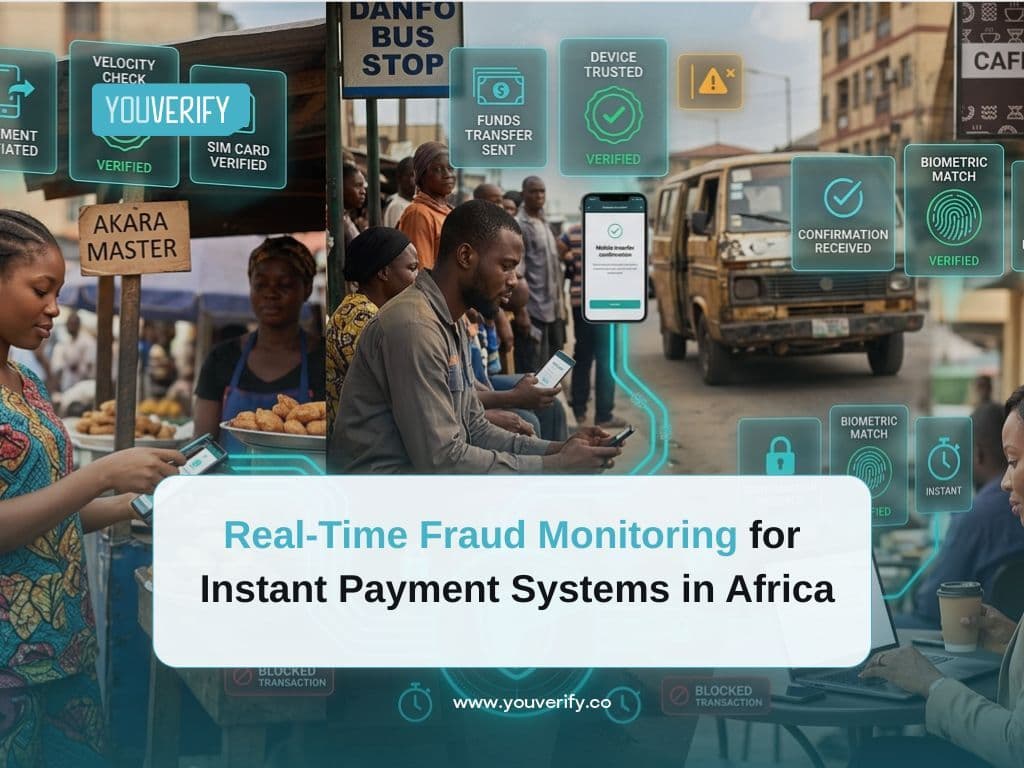
Modern fraud detection systems and anti-fraud solutions help banks and fintechs reduce fraud losses, improve compliance, and strengthen payment security.
Instant payment systems have transformed how money moves across Africa. Platforms such as GHIPSS Instant Pay (GIP), Nigeria Instant Payment (NIP), and the Nigeria Automated Clearing House System (NAPS) enable individuals and businesses to transfer funds within seconds.
While this speed improves customer experience and financial inclusion, it also creates new fraud risks. Once a transaction is processed, there is often little opportunity to recover stolen funds or reverse fraudulent payments.
This is why real-time fraud monitoring has become a critical requirement for banks, fintechs, and payment service providers operating in Africa.
In this article, we explore the fraud risks affecting GHIPSS, NIP, and NAPS, the fraud monitoring controls institutions need, and how modern fraud detection systems help prevent financial crime before funds leave customer accounts.
What Is Real-Time Fraud Monitoring?
Real-time fraud monitoring is the continuous analysis of transactions, customer behaviour, devices, and payment activity as transactions occur.
Unlike traditional fraud reviews that happen after a transaction is completed, real-time fraud monitoring identifies suspicious activity before funds are transferred or withdrawn. This enables financial institutions to stop potentially fraudulent transactions before losses occur.
Modern fraud detection systems combine rules-based screening, behavioural analytics, machine learning, device intelligence, and risk scoring to assess transactions within milliseconds.
For instant payment systems such as GHIPSS, NIP, and NAPS, real-time fraud monitoring plays a critical role in fraud prevention because payments are processed almost immediately.
Why is Fraud Monitoring Essential for Instant Payments?
Instant payment systems have significantly reduced transaction times across African fintechs. However, the same speed that benefits consumers can also benefit fraudsters.
When a fraudulent transaction is processed through an instant payment rail, funds can be transferred across multiple accounts before investigators have time to intervene. Traditional fraud reviews conducted after settlement are often too late.
Effective fraud transaction monitoring helps financial institutions detect suspicious activity before transactions are completed. And as fraud tactics continue to evolve, fraud monitoring is becoming a core component of payment security, regulatory compliance, and customer protection.
The Fraud Challenge Across African Instant Payment Systems
Nigeria's NIP processes millions of transactions daily, while GHIPSS Instant Pay supports real-time transfers between banks and mobile money providers across Ghana.
These systems have transformed commerce, remittances, and financial inclusion. However, they have also become attractive targets for fraudsters and bad actors.
Unlike traditional payment systems that provide review windows before settlement, instant payment rails process transactions almost immediately. This leaves payment institutions with only a few seconds to identify and stop suspicious activity.
As a result, financial institutions operating on GHIPSS, NIP, and NAPS increasingly rely on anti-fraud solutions capable of analysing transactions in real time.
How Ghana’s GHIPSS Instant Pay Works
The Ghana Interbank Payment and Settlement Systems Limited (GHIPSS) operates GIP, Ghana's national instant payment platform.
The system enables real-time transfers between banks, financial institutions, and mobile money providers twenty-four hours a day, seven days a week.
Fraud Monitoring Requirements for GHIPSS
To strengthen fraud prevention across the GIP ecosystem, financial institutions should implement:
Control
Purpose
Velocity monitoring
Detect unusually high transaction volumes within short periods
Geolocation analysis
Identify transactions from unusual locations
Device fingerprinting
Detect activity from new or unregistered devices
Beneficiary screening
Identify transfers to known mule accounts
SIM swap detection
Flag transactions following recent SIM changes
Understanding the Nigeria’s NIP Infrastructure
Nigeria Instant Payment (NIP), operated by NIBSS, enables banks, fintechs, and payment service providers to transfer funds instantly between accounts at any time of the day.
Because transactions settle rapidly, fraud prevention controls must operate before payment authorisation is completed.
Common Fraud Risks on NIP and GIP
1. SIM Swap Fraud
SIM swap fraud occurs when fraudsters gain control of a customer's mobile number and intercept authentication messages or one-time passwords.
Once control of the number is obtained, fraudsters can access accounts and initiate unauthorised transactions through GIP.
2. Authorised Push Payment (APP) Scams
APP scams occur when customers are manipulated into voluntarily sending money to fraudulent accounts.
Criminals often impersonate bank representatives, government agencies, service providers, or trusted contacts to convince victims to authorise transfers themselves.
Because the customer approves the transaction, these scams can be difficult to detect without advanced fraud detection systems.
3. Mule Account Networks
Fraud proceeds are often moved through multiple accounts before reaching their final destination.
These mule account networks are designed to make investigations more difficult and obscure the flow of stolen funds.
For this reason, effective fraud monitoring must analyse recipient behaviour as well as sender activity.
4. Account Takeover (ATO)
Account takeover occurs when fraudsters obtain customer credentials through phishing attacks, fake banking websites, social engineering, or credential theft.
Once access is gained, funds are transferred to fraudulent beneficiary accounts through NIP.
Fraudsters may add new beneficiaries to compromised accounts before initiating high-value transfers.
Without proper fraud transaction monitoring controls, these activities can go undetected until funds have already been withdrawn.
6. Insider-Enabled Fraud
Internal actors with privileged access may attempt to bypass controls, suppress alerts, or facilitate unauthorised account activity.
This makes behavioural monitoring and audit trails essential components of a modern fraud detection system.
Early Warning Signs of Fraudulent Transactions
To achieve strong fraud prevention, one has to be at alert and be able to recognise suspicious activities before losses occur.
Common warning signs include:
Multiple transactions within a short timeframe
Unusually large transaction values
Login attempts from unfamiliar devices
Recent SIM swap activity
Transfers to newly added beneficiaries
Transactions initiated from unusual locations
Sudden changes in customer behaviour
When these indicators appear together, they may suggest elevated fraud risk and should trigger additional investigation. Real-time fraud monitoring systems use these signals to detect potential threats and respond before funds are transferred.
How Fraud Detection Systems Protect Instant Payment Rails
Modern anti-fraud solutions rely on multiple layers of protection that work together to identify suspicious activity in real time. These layers are highlighted below.
1. Data Ingestion Layer
The first layer collects transaction data, customer activity, device information, and payment events as they occur.
2. Rules Engine
The rules engine applies predefined fraud monitoring rules, such as transaction limits, velocity checks, and beneficiary risk controls.
3. AI-Powered Risk Scoring
Machine learning models analyse transaction behaviour and assign risk scores based on patterns that may indicate fraud. And this allows institutions to identify suspicious activity that may not be detected through traditional rules alone.
4. Alert Management and Investigation
When potential fraud is identified, alerts are automatically routed to investigators for review and action. Automation helps reduce response times and improves investigation efficiency.
5. Regulatory Reporting
Modern fraud transaction monitoring systems can also automate suspicious activity reporting, helping institutions meet compliance obligations while reducing manual workloads.
Alert Threshold Design and Optimisation
One of the biggest challenges in fraud monitoring is finding the right balance between detection and operational efficiency.
Thresholds that are too low may generate large volumes of false positives, overwhelming investigation teams. Thresholds that are too high may allow fraudulent transactions to pass unnoticed.
To improve effectiveness, institutions should:
Establish customer behaviour baselines
Use historical transaction data
Apply adaptive risk thresholds
Continuously review fraud patterns
Monitor false-positive rates
A well-calibrated fraud detection system helps institutions improve fraud prevention while maintaining a positive customer experience.
Integrating Fraud Monitoring with Regulatory Reporting
Fraud monitoring does not end with detection. Financial institutions must also maintain processes for investigation, escalation, and reporting.
Automated reporting workflows help ensure suspicious transactions are documented, investigated, and reported to the appropriate regulatory bodies when required.
Maintaining complete audit trails, alert histories, and investigation outcomes also improves transparency and supports regulatory compliance.
For financial institutions operating across multiple payment rails, integrating fraud monitoring with reporting processes creates a stronger and more efficient fraud management framework.
Why Choose Youverify's Transaction Monitoring for African Instant Payments?
Youverify Transaction Monitoring solution combines real-time fraud monitoring, AI-powered risk scoring, behavioural analytics, device intelligence, and automated alert management to help institutions detect and stop suspicious transactions before funds leave customer accounts.
Built for African payment ecosystems, the Youverify Cowork platform supports fraud monitoring across payment rails such as NIP, GHIPSS, and NAPS while providing a 360-degree view of customer activity, transaction behaviour, and fraud risk.
Request a demo today to see how Youverify helps banks, fintechs, and payment providers in Africa detect fraud in real time and stay ahead of evolving threats.
About the Author
Favour Praise is a fintech and compliance researcher and writer specialising in RegTech, KYC/AML automation, and financial crime prevention across Africa and emerging markets. Her work focuses on translating complex regulatory frameworks into practical, actionable insights for banks, fintechs, and compliance teams.