
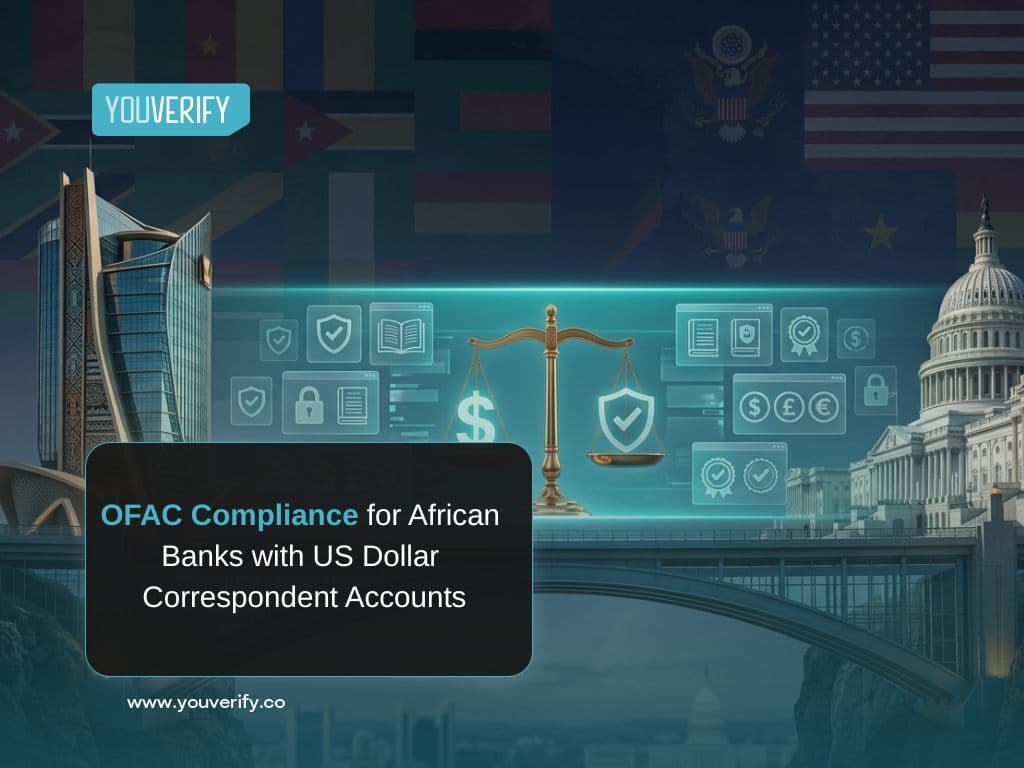
African banks that process US dollar transactions are automatically exposed to OFAC sanctions requirements. Once a USD payment passes through a US correspondent bank, the transaction falls under US sanctions jurisdiction regardless of where the African bank operates.
For banks across Nigeria, Kenya, Ghana, and South Africa, this makes OFAC compliance a critical part of modern AML and sanctions programmes.
In 2026, the stakes are even higher. OFAC enforcement has expanded beyond direct US transactions to include secondary sanctions exposure, beneficial ownership risks, and trade finance controls. A single sanctions violation can trigger massive financial penalties, reputational damage, or even loss of correspondent banking access.
According to the US Treasury, civil penalties for a single OFAC violation can exceed USD 364,992 or twice the transaction value.
What Is OFAC and Why Does It Apply to African Banks?
OFAC, the Office of Foreign Assets Control, is part of the US Treasury Department. It administers sanctions programmes targeting individuals, companies, countries, and sectors linked to terrorism, sanctions evasion, corruption, or national security threats.
African banks become subject to OFAC requirements when they process USD-denominated transactions through US correspondent banks such as JPMorgan Chase, Citi, or Wells Fargo.
This means a Nigerian bank processing a USD trade payment, a Kenyan bank handling diaspora remittances, or a South African bank settling commodity exports in USD may all fall under OFAC jurisdiction.
Read on: Sanctions Screening for African Banks
Understanding OFAC Primary and Secondary Sanctions
Primary Sanctions
Primary sanctions apply directly to transactions connected to the US financial system.
For African banks, the biggest trigger is the USD correspondent banking relationship. Once a USD transaction passes through the US banking system, OFAC screening obligations apply.
Secondary Sanctions
Secondary sanctions extend OFAC enforcement beyond USD transactions.
African banks may face exposure if they facilitate transactions involving sanctioned persons, process payments linked to sanctioned sectors, or maintain relationships with sanctioned entities and high-risk counterparties.
This is especially important in trade finance involving Russia, Iran, or other sanctioned jurisdictions.
The OFAC Sanctions Programmes Most Relevant to African Banks
Sanctions Programme
| Key Restrictions
| African Bank Exposure
|
| SDN List (all programmes) | No transactions with designated individuals or entities | All USD transactions and any SDN hit must be blocked |
| Russia Sanctions (CAATSA, EO 14024) | Restrictions on Russian financial institutions, energy sector, defence entities | Trade finance involving Russian commodities (oil, wheat, fertiliser) |
| Iran Sanctions | Near-total prohibition on transactions with Iran | Any transaction with Iranian counterparties, even indirect |
| Secondary Sanctions | Targets significant transactions with designated entities | Non-USD transactions facilitating sanctioned activity |
| OFAC’s 50% Rule | Entities 50%+ owned by an SDN are also blocked, even if not named on the SDN list | Beneficial ownership screening of all corporate counterparties |
The OFAC 50% Rule is one of the most overlooked requirements. A company can still be blocked even if its name does not appear on the Specially Designated Nationals (SDN) list, provided sanctioned individuals own 50% or more of the entity. This is why beneficial ownership screening is essential for African banks.
Core OFAC Compliance Requirements for African Banks
OFAC’s Framework for Compliance Commitments (2019, updated 2023) identifies five essential components of an effective OFAC compliance programme. For African banks with USD correspondent accounts, these components are the baseline expectation:
1. Management Commitment
Senior management must actively support sanctions compliance. Banks should maintain documented OFAC policies, appoint a dedicated compliance officer, and ensure teams handling trade finance, treasury, and correspondent banking receive regular sanctions training.
2. Risk Assessment
African banks should conduct periodic sanctions-focused risk assessments covering customer exposure, geographic risk, correspondent banking relationships, trade finance activity, and USD transaction volumes.
Institutions involved in international trade, commodity financing, or cross-border payments generally face higher OFAC exposure.
3. Real-Time Screening Controls
Banks must screen customers, beneficial owners, transaction parties, and correspondent banking partners against OFAC sanctions lists before processing USD payments.
Effective screening should happen in real time and include beneficial ownership checks aligned with the OFAC 50% Rule.
4. Testing and Audit
Independent testing helps ensure sanctions controls are functioning properly. African banks should regularly review screening accuracy, false positive rates, escalation workflows, and sanctions data coverage.
What Happens When an African Bank Hits an SDN Match?
When a transaction matches an OFAC-listed entity, the bank must act immediately.
The institution may need to block the transaction, freeze funds, escalate internally, and file a report with OFAC within 10 business days.
The customer must not be informed that a sanctions investigation or blocking action has occurred.
Also, failure to respond properly can expose the bank to severe penalties and correspondent banking restrictions.
Why OFAC Compliance Matters for African Banks
For African banks, OFAC compliance is directly tied to access to global finance and international correspondent banking.
Banks with weak sanctions controls risk heavy financial penalties, trade finance disruption, reputational damage, and even termination of USD correspondent banking relationships.
As African financial institutions expand cross-border payment operations, sanctions compliance is becoming a core operational necessity rather than a back-office compliance function.
Practical OFAC Screening Requirements
For African banks with USD correspondent accounts, OFAC sanctions screening must cover:
1. Customer Onboarding: All customers and beneficial owners should be screened against OFAC SDN and global sanctions lists during onboarding.
2. Transaction Monitoring: Every USD wire transfer should be screened in real time before processing.
3. Trade Finance Screening: Banks must screen all parties involved in letters of credit, guarantees, and documentary collections.
4. Ongoing Rescreening: All existing customers rescreened as SDN list updates are published (OFAC updates the SDN list multiple times per week).
Also Read: AML Regulations in Banking and How to Stay Compliant
How Youverify Supports OFAC Compliance for African Banks
Youverify provides an AI-powered sanctions screening and FRAML platform built for African financial institutions.
The platform helps banks screen customers, transactions, and beneficial owners against OFAC SDN, UN, EU, and local sanctions lists in real time. Screening is integrated directly into onboarding, wire transfers, and transaction monitoring workflows to support high-volume banking environments.
Youverify also supports beneficial ownership screening aligned with the OFAC 50% Rule, helping institutions identify hidden sanctions exposure across corporate structures.
With automated alert management, audit-ready reporting, and configurable risk scoring, African banks can strengthen sanctions compliance while reducing operational burden and false positives.
Speak with our compliance experts to see how this works.
About the Author
| Favour Praise is a fintech and compliance researcher and writer specialising in RegTech, KYC/AML automation, and financial crime prevention across Africa and emerging markets. Her work focuses on translating complex regulatory frameworks into practical, actionable insights for banks, fintechs, and compliance teams. |