Best Digital Customer Onboarding Software for Banks and Fintechs in 2027
ByTemitope Lawal
•5mins Read
Key Takeaways
Digital onboarding replaces branch visits with remote identity verification, screening and risk scoring, usually completed on a mobile device.
In Nigeria, onboarding must meet the CBN Customer Due Diligence Regulations, 2023, tiered KYC rules and the Nigeria Data Protection Act (NDPA) 2023.
Strong software verifies identities against government registries, not just document images, and detects deepfakes and injection attacks.
Choose a platform that keeps onboarding, screening and ongoing monitoring on one customer record with a full audit trail.
Measure success by completion rate, time to decision, manual review rate and fraud caught after onboarding, not speed alone.
The right digital onboarding solutions let you approve a genuine customer in minutes and stop a fraudster at the door. Get it wrong, and you lose good customers to friction or let bad actors in. In Africa, where most new customers arrive on a phone, that balance decides growth.
This guide explains what digital customer onboarding software does and what African regulators expect from it. It also covers the fraud it must stop and how to choose a platform that holds up under examination.
What Is Digital Customer Onboarding Software?
Digital customer onboarding software lets regulated businesses verify and approve new customers remotely. It collects customer details, checks identity documents and biometrics, and confirms data against official records. It then screens the customer and assigns a risk level before opening the account.
Unlike general customer onboarding software used for product tours, this category is built for compliance. Its job is to meet Know Your Customer (KYC) and anti-money laundering (AML) obligations without slowing genuine customers down. It sits at the front of your wider KYC software stack.
Why Digital Customer Onboarding Matters in Africa
Digital customer onboarding is how most African financial services now grow. In Nigeria, formal financial inclusion rose to 64% of adults in 2023, according to the EFInA Access to Financial Services survey. The same survey found 26% of adults remained financially excluded.
Identity coverage is also growing. The National Identity Management Commission (NIMC) reported more than 136 million NIN enrolments in July 2026. A World Bank review put issued NINs nearer 121 million by September 2026. Either way, tens of millions of adults are still not enrolled.
That gap shapes onboarding design. Your software must verify customers who have strong digital identities and support lower tiers for those who don't. It must also stop fraudsters who exploit weaker checks at the entry level.
What Regulators Require from Digital Onboarding
Remote onboarding doesn't lower the compliance bar. The CBN Customer Due Diligence Regulations, 2023 apply to every financial institution the Central Bank of Nigeria (CBN) supervises. They require documented procedures for identifying and verifying both new and existing customers.
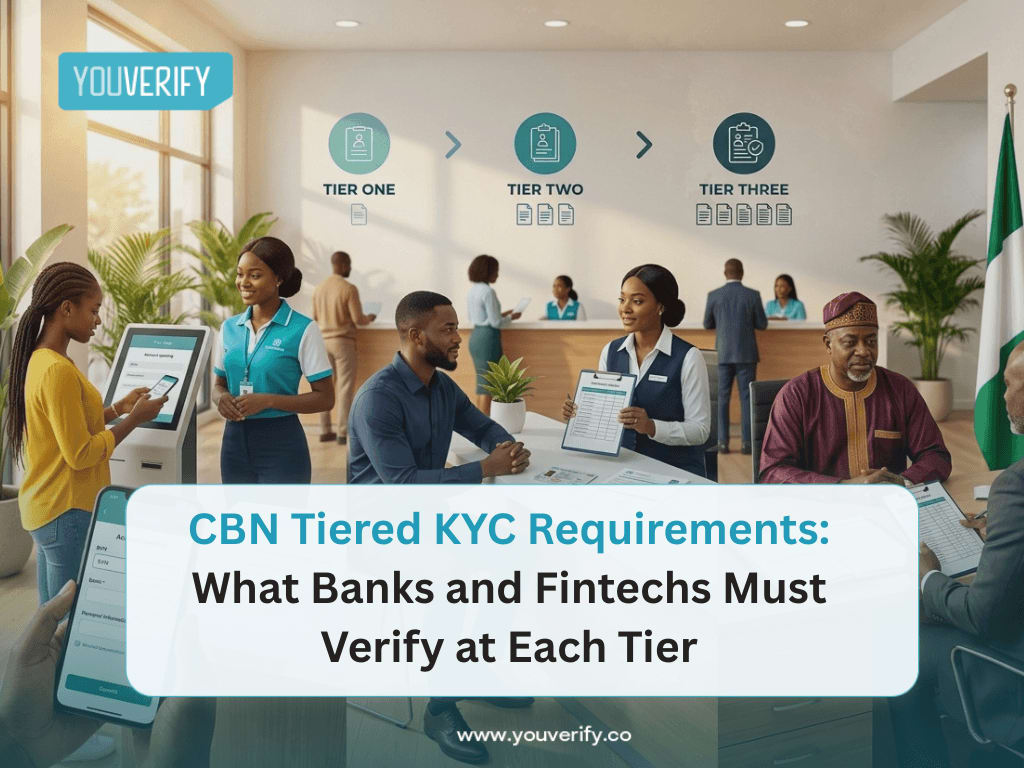
The CBN's three-tiered KYC framework links account limits to the depth of verification. Lower tiers allow simpler checks with tighter limits. Higher tiers require fuller identity verification. Your onboarding software should apply the right checks automatically as customers move between tiers.
Data protection sits alongside these rules. The NDPA 2023 requires a lawful basis, such as consent, for processing personal data. It also covers the third-party processors you use, including your onboarding vendor. The NIMC Act 2026, which repealed the 2007 law, also strengthens the role of the NIN as Nigeria's primary identity.
A typical digital onboarding journey has seven steps. Each one should be logged so you can show an examiner exactly what happened.
The first step is data capture. The customer enters basic details and consents to data processing. Good software pre-fills fields from verified sources to reduce typing and errors.
Next comes identity verification. The software checks identifiers such as the National Identification Number (NIN) or Bank Verification Number (BVN) against official records. This is the strongest single control against fake identities.
The third step is document verification. The system reads the ID document, checks security features and flags signs of tampering.
The fourth step is biometric matching with liveness detection. It confirms the person is real, present and matches the document photo.
The fifth step is screening. The customer is checked against sanctions, politically exposed person (PEP) and adverse media lists. The results feed a risk score.
The sixth step is the decision and digital account opening. Low-risk customers are approved automatically. Exceptions go to a compliance officer with the evidence attached.
The final step is ongoing monitoring. Approved customers are re-screened and reviewed over time, so onboarding is not a one-off event.
Must-Have Features in Digital Onboarding Solutions
Digital onboarding solutions differ most in what happens behind the selfie screen. Registry-based verification comes first. Checks against government and telco records catch fake identities that a good-looking document might hide.
Liveness detection must resist modern attacks. Look for protection against deepfakes, screen replays and injection attacks, where fake video is fed straight into the camera stream. Device and behavioural signals add another layer, flagging risky sessions before an account is funded.
Business customers need Know Your Business (KYB) checks. The software should return company details, directors and ultimate beneficial owners (UBOs) from official registries. Screening must cover both individuals and the owners behind businesses.
Configurable workflows matter more than any single feature. Your team should be able to set tier thresholds, document rules and approval routes without engineering work. Learn more about compliance workflow automation and how it supports this.
Finally, every exception should open a case on the same customer record, with the evidence attached. That keeps the audit trail intact from first click to final decision.
Onboarding Fraud Your Software Must Stop
Onboarding is where most financial crime starts. Synthetic identities blend real and invented data to create customers who don't exist. Registry checks and duplicate detection are the main defences.
Deepfakes and injection attacks target the selfie step. Passive liveness detection, backed by optional active challenges, helps stop them. Document tampering remains common, so automated forensic checks are essential.
Mule accounts and account farming are a growing problem for fintechs. Fraudsters recruit people or harvest identities to open many accounts. Device fingerprinting and entity deduplication help link these accounts before money moves.
How to Choose a Digital Onboarding Platform
A digital onboarding platform should be judged on how it performs under real conditions, not in a demo. Ask every provider these questions before you sign.
Question to ask
Why it matters
Which government and telco sources do you verify against, in which African countries?
Registry checks stop fake identities that documents miss
How do you detect deepfakes and injection attacks?
Selfie fraud is now automated
Can we configure tier thresholds and approval routes ourselves?
CBN tiered KYC needs different checks per tier
Do you screen business owners as well as individuals?
KYB and UBO checks are core to CDD
What does an examiner see for one customer's onboarding?
Your audit trail is your defence
Where is customer data stored, and how do you meet the NDPA?
Your vendor is your data processor
Do you re-screen customers after approval?
Onboarding is the start of monitoring, not the end
How long does integration take, and is there a sandbox?
Delays push launch dates and costs
Digital Onboarding by Business Type
The right onboarding design depends on who you serve and who supervises you.
Digital Onboarding for Banks
The customer onboarding process in banks must handle individuals, businesses and complex ownership structures. Banks need strong KYB, UBO and enhanced due diligence (EDD) for higher-risk customers. Every decision should be traceable to policy and an accountable officer.
Banks also need to bring legacy customers up to current standards. Digital onboarding tools that support re-verification help close gaps in older files.
Digital Onboarding for Fintechs and Payment Companies
Fintech onboarding has to be fast, mobile-first and fraud-resistant. Fintechs should start customers on lower tiers and trigger extra checks automatically as limits rise. Device intelligence and deduplication are essential against mule networks.
Digital Onboarding for Gaming and Betting Operators
Gaming and betting operators must confirm age and identity before players deposit or withdraw. Onboarding should be quick, but checks must still meet AML rules for large or unusual transactions.
How to Measure Onboarding Performance
Speed alone is a poor measure. Track the completion rate to see how many genuine applicants finish the journey. Track time to decision to spot bottlenecks.
The manual review rate shows how much work reaches your compliance team. A false rejection rate shows how many good customers you turn away. Finally, track fraud detected after onboarding. A rise there usually means your front-door checks are too weak.
How Youverify Handles Digital Customer Onboarding
Youverify is built on one idea: customer onboarding you can defend. It runs KYC, KYB, risk scoring and EDD as one workflow, on one customer record with one audit trail.
Youverify verifies customers against 150+ official identity sources and 145+ business registries. Passive liveness detection guards against deepfakes, replays and injection attacks. Device intelligence and entity deduplication flag risky sessions and duplicate profiles. Screening continues after approval, so KYC and AML checks don't stop at sign-up.
Vyra, Youverify's AI agent, runs the onboarding flow, routes exceptions and drafts case summaries. Named officers make the final decisions. Youverify holds SOC 2 Type II, ISO/IEC 27001:2022 and ISO/IEC 42001:2023 certifications. It is registered with data protection authorities in Nigeria, Kenya, South Africa and Côte d'Ivoire.
Digital onboarding is the process of verifying and approving a new customer entirely online. It typically includes identity verification, document and biometric checks, screening and risk scoring. Banks, fintechs and other regulated businesses use it to meet KYC and AML rules without branch visits.
Digital onboarding solutions for banks range from identity verification tools to full compliance platforms. Banks should look for registry-based identity checks, KYB and beneficial ownership verification, screening and case management. A platform that keeps all of this on one customer record is easier to defend in an examination.
KYC is the regulatory requirement to identify and verify customers and assess their risk. Digital onboarding is the customer journey that carries out those checks online. Good digital onboarding software applies KYC rules automatically while keeping the process fast for genuine customers. Read more about KYC verification.
For low-risk individuals, digital onboarding can be completed in minutes when identity data is verified against official sources. Higher-risk customers and businesses take longer, because they need enhanced due diligence and manual review. The timeline depends on your risk policy and data coverage.
Digital onboarding reduces fraud by checking identity data against government records and confirming the applicant is a live person. It also uses device signals to spot suspicious sessions. Duplicate detection links accounts opened by the same fraudster, and screening flags sanctioned or high-risk individuals before accounts are opened.
No. Fintechs, payment companies, microfinance banks, insurers, gaming operators and gig platforms all use digital customer onboarding software. Any business with KYC or AML obligations, or a high fraud risk at sign-up, can benefit from automated identity verification and screening.