


Key Takeaway
1. Youverify is the top choice for enterprise-grade document verification, combining fraud prevention and regulatory compliance.
2. Accuracy, compliance, and integration are essential when selecting a document verification solution.
3. Document verification alone isn’t enough; it must be part of a broader fraud and risk management strategy.
Introduction
Financial institutions don’t lose money because IDs are forged; they lose because systems accept them. In 2026, document fraud will be an operational concern; it is a critical compliance risk. For banks, fintechs, and other regulated organizations, failing to properly verify documents can lead to financial losses, regulatory penalties, and reputational damage.
Fake bank statements represent 59% of all fraudulent documents detected, followed by pay stubs at 11.7% and utility bills at 10.2%.
Choosing the right document verification software is no longer about checking boxes; it’s about ensuring accuracy, compliance, and fraud prevention across the customer lifecycle.
In this article, we review the 8 best document verification software solutions, highlighting their strengths, limitations, and how they fit into modern compliance and fraud-prevention strategies.
What is Document Verification Software?
Document verification software uses OCR, computer vision, machine learning, and biometric authentication to confirm the authenticity of identity documents and financial documents submitted by customers or employees.
Modern document verification software platforms verify:
1. Government-issued IDs
2. Passports
3. Utility bills
4. Bank statements
5. Business registration documents
6. Tax records
7. Employment documents
A modern document verification software solution must include:
1. AI-OCR for structured and unstructured documents
2. Biometric verification and facial matching
3. Deepfake, tamper, and spoofing detection
4. Automated AML/KYC risk scoring
5. Real-time API/SDK integrations
6. Compliance reporting and audit trails
How We Evaluated the 8 Best Document Verification Software
Each software in this review was evaluated using enterprise-grade criteria:
1. Accuracy & reliability of document verification
2. Fraud detection capabilities
3. Compliance coverage (AML, KYC, GDPR/NDPR, CBN, FATF)
4. Integration options (API, no-code, SDK)
5. Scalability for high-volume organizations
6. Real-time onboarding support
Here are the 8 best document verification software
1. Youverify
Overview:
Youverify is a leading fraud prevention provider that offers a document verification trusted by banks, fintechs, and regulated businesses across the globe. It unifies compliance teams, fraud analysts, and IT departments on a single platform, eliminating the need for standalone cybersecurity or MFA systems.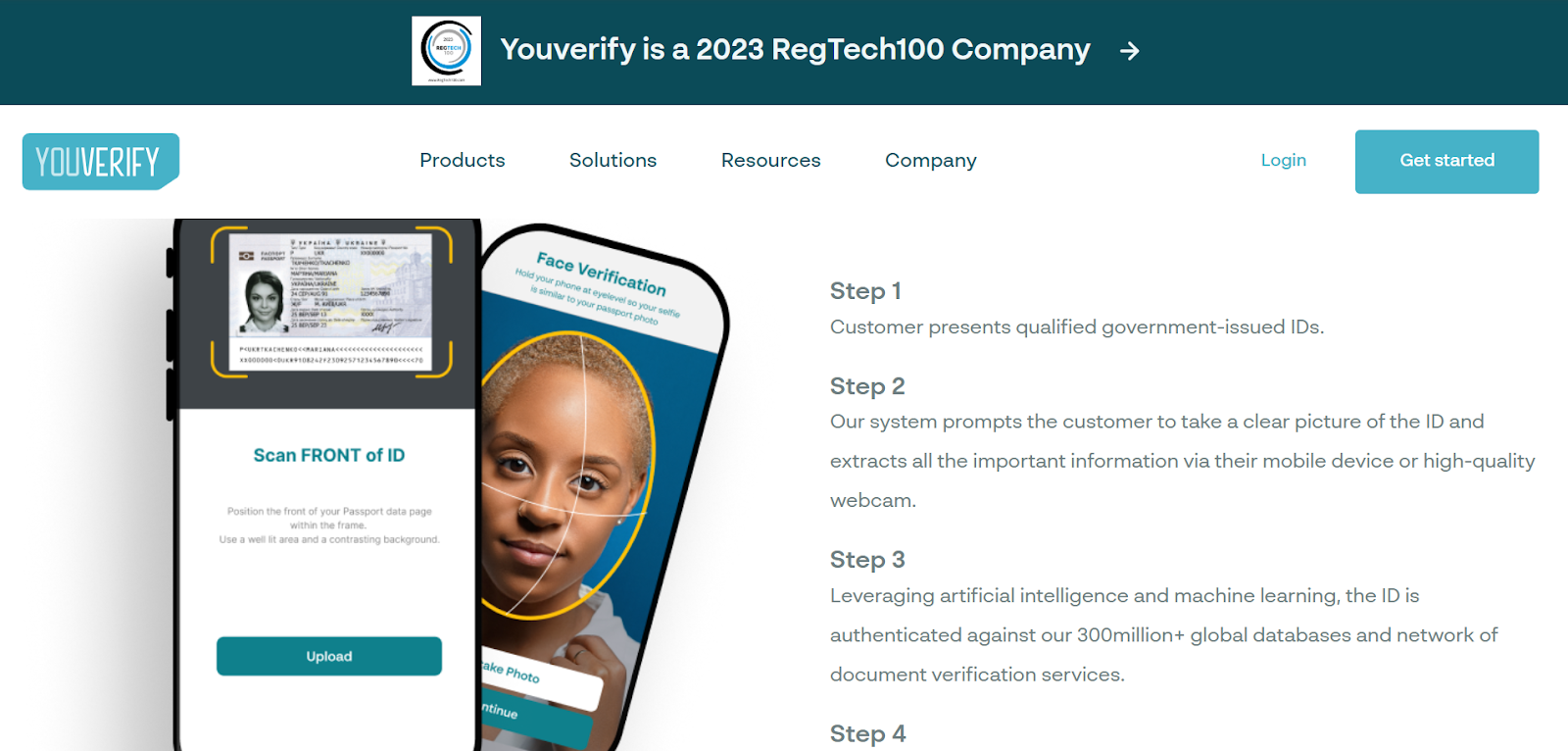
Best for:
- Youverify is best for KYC/AML, offering automated ID verification, AML checks, and real-time fraud prevention ideal for banks, fintechs, and regulated businesses.
Strengths:
- Unified compliance & fraud prevention
- High accuracy even with complex African IDs
- Scalable for enterprise-level onboarding
- Real-time alerts for suspicious activity
Why Youverify is #1:
Youverify doesn’t just verify documents; it prevents fraud, ensures compliance, and enhances decision-making, making it the platform of choice for regulated businesses.
READ ALSO: Best ID Verification Software Provider in Africa- Expert Advice
2. Jumio
Overview: Jumio combines AI, computer vision, and biometric techniques to verify identity documents, match selfies to ID, detect liveness or spoofing, and even perform supplemental identity checks.
Best for: Enterprises requiring automated ID verification with global compliance standards.
Strengths: High OCR accuracy, biometric verification, multi-country ID support
3. Onfido
Overview: Onfido uses AI + ML + biometric verification to validate IDs and facial biometrics, enabling quick user identity checks.
Best for: Fast, user‑friendly onboarding with flexible API/SDK, good for fintechs, marketplaces and global apps
Strengths: Easy API integration, strong mobile support, scalable
4. IDnow
Overview: IDnow is known for video-assisted identity verification as well as automated document verification
Best for: Compliance‑heavy institutions (especially in Europe) that need strong regulatory and video‑based verification options
Strengths: Video identity verification, strong AML/KYC compliance coverage
5. Mitek
Overview: Mitek specialises in document capture and verification technologies (OCR, identity document scanning, biometric/facial recognition) that work well on mobile devices
Best for: Mobile-first banking or digital onboarding
Strengths: Fast mobile verification, OCR-driven extraction, and liveness detection.
6. Socure
Overview: Socure uses advanced data science and identity graph approaches to verify customers rapidly.
Best for: Scalable identity verification + fraud‑risk scoring for high‑risk industries
Strengths: Fraud risk scoring, predictive analytics, compliance alignment
7. Trulioo
Overview: Trulioo offers identity (and business) verification across many countries, supports KYC/AML compliance, and provides global-coverage identity data.
Best for: Businesses with global or multi‑jurisdictional customers
Strengths: Coverage in 195+ countries, AML/KYC compliance
8. Passbase
Overview: offers document scanning and biometric/facial recognition for identity verification, with real-time processing and flexible APIs/SDKs for integration.
Best for: developer‑friendly identity verification for digital platforms
Strengths: Easy API integration, flexible workflows
INTERESTING READ: How Does Document Verification Process Work?
What to consider for document verification Implementation
When selecting a document verification platform, consider:
1. Manual review capacity for edge cases
2. Regional ID coverage (especially for African markets)
3. Latency and real-time verification need
4. Integration with existing compliance tools
5. False positive management to reduce onboarding friction
What are the Compliance Requirements for Document Verification Software
Top platforms' document verification should meet the following:
1. AML/KYC regulations
2. FATF recommendations
3. GDPR/NDPR data privacy rules
4. CBN and other local regulators
5. Internal audit and reporting standards
The Decision Framework When Choosing a Document Verification Software
Company Size | Risk Level | Jurisdiction | Integration | Compliance Focus |
Conclusion
Document verification in 2026 is about more than checking IDs. It’s about mitigating fraud, ensuring compliance, and integrating verification into a broader risk strategy.
Youverify stands out by combining AI-driven verification, fraud prevention, and regulatory compliance on a single platform in real time, making it the #1 choice for organizations.
Document verification is the front door of customer trust.
Get it wrong, and you invite fraud, regulatory scrutiny, and reputational loss. Get it right, and you onboard only verified, trustworthy users at scale. To get started, book a demo today