Why Choosing the Right Transaction Monitoring Platform Matters
Today financial institutions are operating in a world where fraud is advancing rapidly and the regulatory noose is tightening.
From AML transaction monitoring obligations to real-time fraud detection, businesses are expected to identify suspicious activity early and act quickly. Transaction monitoring is, therefore, essential to any compliance and risk management program.
However, not all transaction monitoring solutions are created equal. It is better to pick the right platform from the beginning rather than changing it constantly. False positive overloads the compliance workforce, poor integration slows day to day business, and monitoring holes leave financial institutions exposed to regulatory sanctions. Rather than an efficiency booster, a bad system can produce alert fatigue, a situation when genuine threats are drowned out by signals.
Selecting and evaluating the right transaction monitoring platform improves detection accuracy, supports AML compliance, and ensures operational efficiency. The wrong one increases risk, cost, and complexity.
What Is Transaction Monitoring?
Transaction monitoring is the process of continuously reviewing customer transactions to detect unusual or suspicious activity. Rather than analysing a single transaction in isolation, it tracks behaviour over time, including spending patterns, transaction frequency, and fund movements, to identify risks early.
A transaction monitoring system automates this process by analysing large volumes of data in real time. It flags anomalies such as unexpected transaction spikes, unusual locations, or patterns that may indicate fraud or money laundering. This is essential for both AML transaction monitoring and fraud transaction monitoring, where early detection can prevent financial loss and regulatory breaches.
The importance of real time transaction monitoring cannot be overstated. It allows institutions to respond instantly to suspicious activity, rather than reacting after damage has occurred. By combining continuous monitoring with intelligent detection, transaction monitoring plays a central role in ensuring compliance, protecting customers, and maintaining trust.
READ ON: What is Real-Time Transaction Monitoring?
Key Features to Look for in a Transaction Monitoring Software
When evaluating a transaction monitoring system, the strength of the platform comes down to how well it detects risk, scales with your operations, and supports compliance without overwhelming your team. Here are the key features to prioritise:
- Real-time transaction monitoring capabilities
The system should analyse transactions instantly, allowing you to detect and act on suspicious activity before it escalates.
- Rule-based + AI-driven detection
A strong transaction monitoring software combines predefined rules with machine learning to improve accuracy and reduce false positives.
- Customisable risk scoring and alerting
The platform should allow you to tailor risk thresholds, scoring models, and alerts based on your business model and regulatory requirements.
- Integration with KYC, sanctions, and AML systems
Seamless integration ensures your transaction monitoring system works alongside identity verification, sanctions screening, and broader AML workflows.
- Scalability and API capabilities
The solution must handle increasing transaction volumes and offer APIs for easy integration with existing infrastructure.
- Cost vs operational efficiency
Look beyond upfront cost. A good system reduces manual reviews, lowers false positives, and improves team productivity.
- Audit trails and reporting
Comprehensive logs and reporting features are essential for regulatory audits, investigations, and demonstrating compliance.
ALSO READ: How to Choose the Best Transaction Monitoring Solution
How to Evaluate a Transaction Monitoring System in Practice
Evaluating a transaction monitoring platform requires more than comparing features on paper. The goal is to determine whether the tool can accurately detect risk, support compliance requirements, and operate efficiently within your existing systems.
To perform this evaluation, you should take note of the following:
- Accuracy vs false positives
An efficient transaction monitoring system should strike the right balance between detecting real threats and minimising false alerts. Too many false positives slow teams down and increase the risk of missing genuine suspicious activity.
- Speed of detection and response
The system must identify and flag suspicious transactions in real time or near real time. Delayed detection reduces the effectiveness of fraud prevention and AML controls.
- Level of vendor support and service
Evaluate the vendor’s ability to provide onboarding support, ongoing updates, and compliance guidance. A good provider acts as a partner, not just a software vendor.
- AI and machine learning capabilities
Look for systems that use AI/ML to improve detection accuracy over time. These models should adapt to evolving transaction patterns and reduce manual intervention.
- Data handling and privacy standards
The platform must meet strong security and compliance standards such as encryption, access control, and certifications like ISO 27001 or SOC 2. This ensures sensitive customer data is protected.
- Ease of integration with existing systems
The solution should integrate smoothly with your current infrastructure, including KYC, payment systems, and compliance tools, without requiring major rebuilds.
- Regulatory alignment
Ensure the platform supports AML requirements and aligns with global standards like FATF, as well as local regulations. This reduces the risk of compliance gaps.
- User experience for compliance teams
A clean, intuitive interface helps analysts investigate alerts faster, reduces training time, and improves overall efficiency.
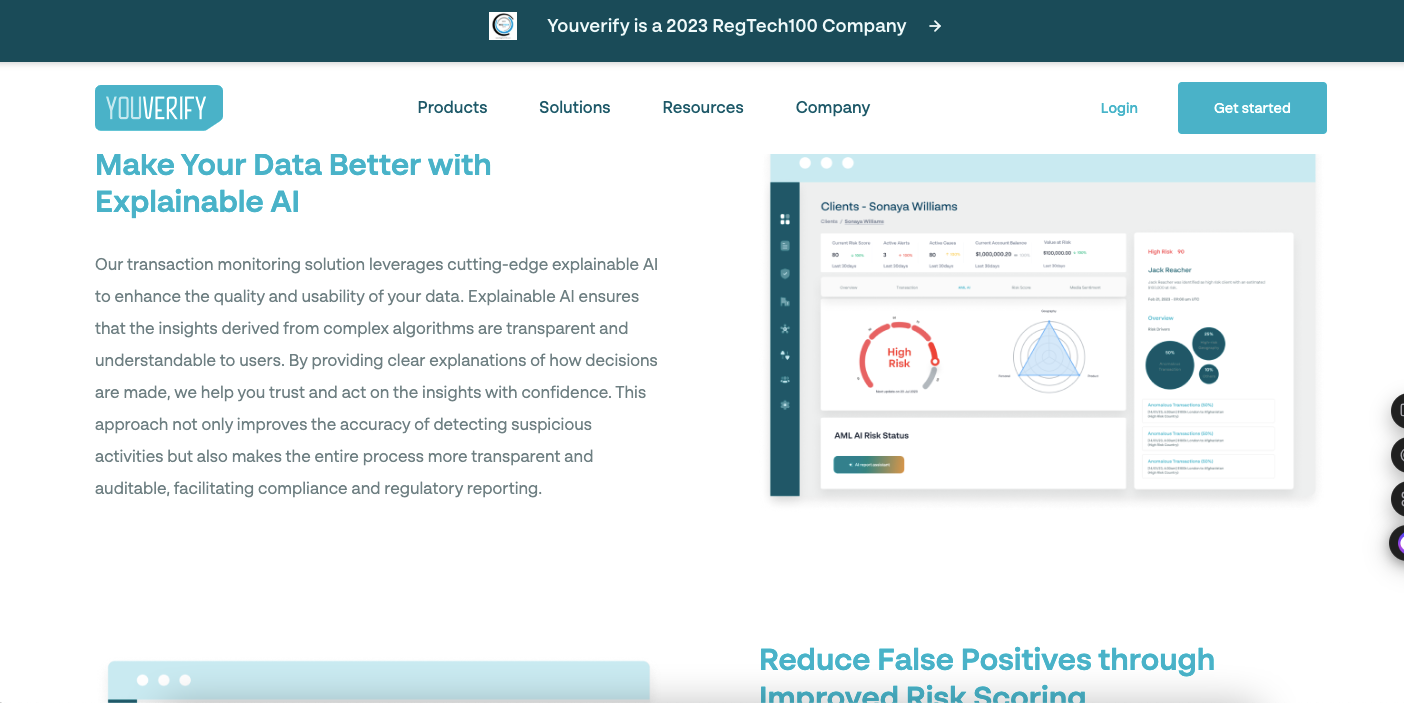
A glimpse of Youverify’s real-time transaction monitiong solution
Choosing a Transaction Monitoring Platform That Scales With Risk and Compliance
Transaction monitoring solutions that integrate automation, real-time transaction monitoring and full integration in compliance workflows provide institutions and businesses with visibility and control to effectively manage risk.
The transaction monitoring solution for your business should be designed to automate and streamline compliance processes, reduce false positives, accurately detect suspicious activity and allow for scaling to accommodate your growing needs.
Youverify offers an advanced, AI-powered suite that consolidates AML, fraud detection, and compliance into a single, intelligent platform.
- Real-time monitoring
- Intelligent risk analysis
- Seamless integration
Book a demo today and experience a smarter, more efficient transaction monitoring solution tailored to your needs.