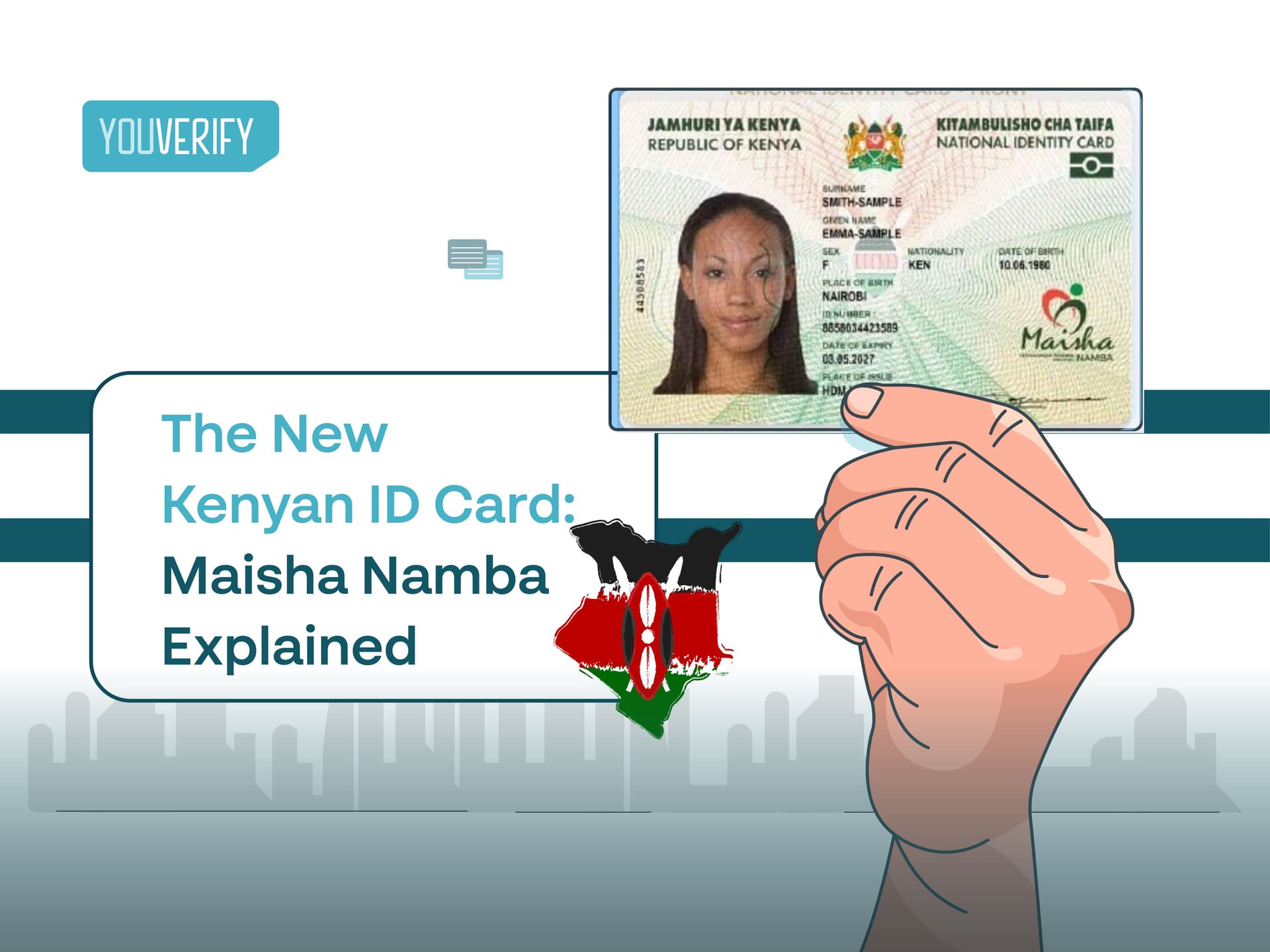
The New Kenyan ID Card: Maisha Namba Explained
KEY TAKEAWAYS
1. Maisha Namba represents a structural reset of Kenya’s identity system, not just a replacement of the Kenyan national ID card, with major implications for KYC, AML, and fraud prevention.
2. For banks, Maisha Namba enables more reliable Kenya ID number checks, reducing identity duplication, impersonation, and onboarding risk.
3. Compliance teams must adapt early, as Maisha Namba will become the foundational identifier across financial services, public records, and digital platforms.
Introduction
Kenya’s national identity framework is undergoing its most significant transformation in decades with the introduction of the Maisha Namba and the new Kenyan ID card. This shift comes amid growing pressure on governments to modernize identity verification systems, reduce fraud, and support secure digital service delivery. For financial institutions, the reliability of the Kenya ID has become central to effective compliance, customer onboarding, and risk management.
The scale of this transition is substantial. By late 2024, over 1.7 million Kenyan ID cards had been printed, clearing a backlog of more than 600,000 applications. As of September 2025, 972,630 Maisha Cards had been issued, with 531,329 new registrations and 441,301 replacements, signaling rapid national adoption.
This is not merely an ID upgrade. The move from legacy systems and the Huduma Namba framework to Maisha Namba represents a national identity infrastructure reset, one that directly affects how banks conduct Kenya ID number checks, verify customers, and meet regulatory obligations in a digital economy.
What Is Maisha Namba?
Maisha Namba is Kenya’s permanent unique personal identifier, assigned to an individual from birth and retained throughout their lifetime. It serves as the backbone of the new Kenyan national ID framework.
Unlike the traditional Kenyan national ID number, which was issued only at adulthood, Maisha Namba is lifecycle-based. It is created at birth registration and later embedded into the physical Kenyan ID card when an individual becomes eligible.
How Maisha Namba Differs From Other Kenya Identity Numbers:
1. National ID number: Previously issued at age 18 and limited in cross-system integration.
2. Huduma Namba: Faced legal, adoption, and trust challenges due to unclear governance.
3. Birth certificate number: Static and isolated, with no interoperability across sectors.
Maisha Namba consolidates these identifiers into a single, verifiable reference point.
READ ALSO: Benefits of Business Identity Verification for Kenyan Startups
Key Features of the New Kenyan ID Card
The Maisha Card introduces several structural improvements over previous Kenyan ID cards:
1. Lifetime unique identifier: One Maisha Namba from birth to death.
2. Civil registration integration: Real-time linkage to birth and death records.
3. Biometric verification: Fingerprints and facial data strengthen identity assurance.
4. Digital-first design: Designed for interoperability across public and private systems, including banking platforms.
For compliance teams, these features significantly strengthen the integrity of Kenya ID verification.
INTERESTING READ: Trends In Digital Identity Verification in Kenya
How Maisha Namba Works Across the Citizen Lifecycle
Maisha Namba follows a clear identity lifecycle:
1. At birth: Assigned during civil registration.
2. Education and employment: Used to verify identity across institutions.
3. Healthcare and voting: Enables accurate service access.
4. Financial services: Becomes the primary reference for Kenya ID number checks.
5. At death: Deactivated to prevent identity misuse.
This lifecycle-based approach is critical for trust, auditability, and fraud prevention.
Differences Between Maisha Namba and Previous ID Systems
Area | Previous Systems | Maisha Namba |
| Coverage | Fragmented | Universal |
| Accuracy | Prone to duplication | Biometrically anchored |
| Fraud Risk | High | Significantly reduced |
| Data Sharing | Siloed | Inter-agency |
| Legal Clarity | Weak (Huduma) | Stronger governance |
Opinionated insight: Maisha Namba is far more legally and operationally viable than Huduma Namba ever was, particularly for regulated sectors like banking.
What is the Kenya ID Impact on Financial Institutions?
For banks and fintechs, Maisha Namba reshapes:
1. KYC and AML compliance
2. Customer onboarding efficiency
3. Fraud detection and identity verification
4. Reduction in duplicate or impersonated identities
Reliable Kenya ID number checks become faster, more accurate, and easier to automate.
Frequently Asked Question?
Q1. What is the Maisha ID card in Kenya?
The Maisha ID card is the new Kenyan ID card linked to a lifetime Maisha Namba, serving as the official Kenyan national ID.
Q2. What is the new ID format in Kenya?
The new format is a biometric-enabled, digital-first Kenyan ID card with integrated civil registration data.
Q3. Does the Maisha card have a serial number?
Yes. The card includes a unique Maisha Namba and additional internal reference identifiers for verification.
Q4. What are the security features of the Maisha card?
Biometric data, encrypted chip technology, controlled access, and centralized verification capabilities.
Conclusion
As Maisha Namba becomes the foundation of identity in Kenya, banks need trusted, scalable verification infrastructure. Youverify enables secure Kenyan ID card verification, automated Kenyan ID number checks, and end-to-end KYC and AML compliance, helping financial institutions onboard customers faster while staying compliant.
To get started, book a demo today.
Related Articles

What Is A Neo Bank?

How to Protect Your Business from Identity Fraud in the US