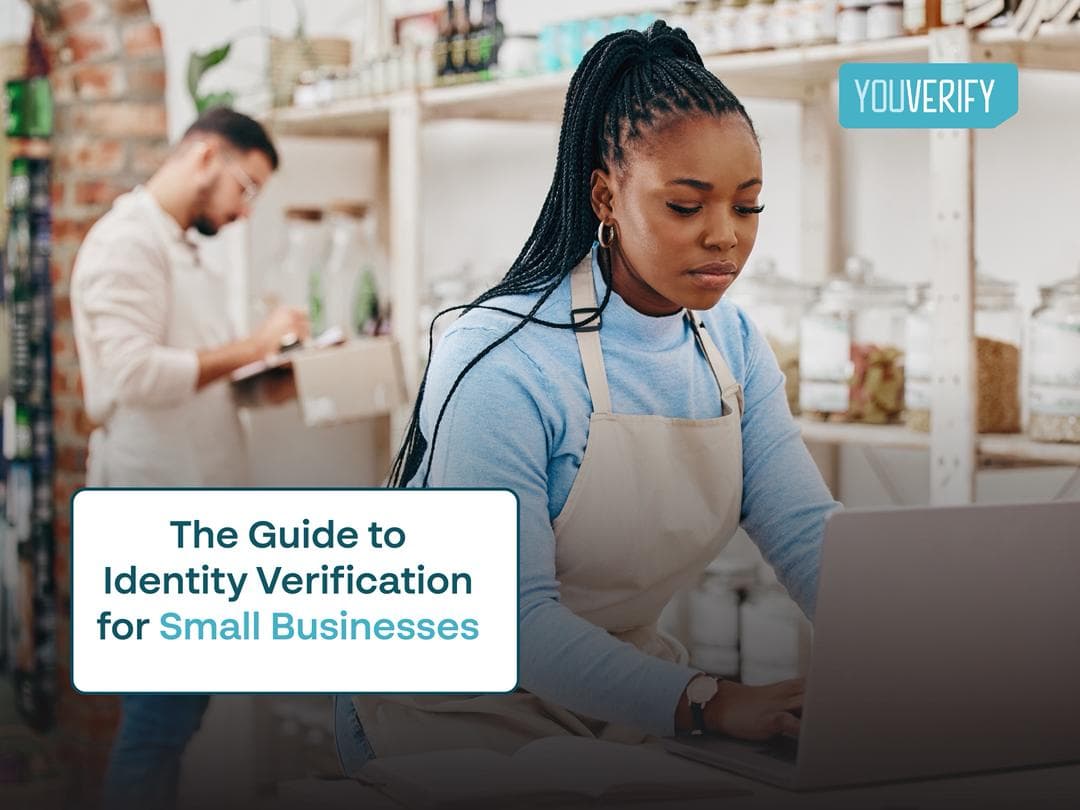
The Guide To Identity Verification For Small Businesses
Key Takeaways:
1. Small businesses are constantly targeted by fraud, making identity verification essential for reducing fraud risks and verifying the legitimacy of customers.
2. Choosing the right identity verification service enables secure growth, improves customer trust, and supports compliance without adding friction to onboarding.
3. Identity verification software for small businesses automates customer checks, helping SMBs confirm identities quickly while reducing manual errors and operational risk.
Introduction
As online payments, remote sign-ups, and digital channels become difficult to monitor manually, the risk of fraud grows.
With the rising issue of identity theft and scams, regulated and non-regulated businesses are constantly pressured to implement stricter forms of identity checks.
Fraudsters have also become more sophisticated; they take advantage of weak onboarding processes and steal credentials to target small businesses that lack robust security controls.
For small businesses, identity verification adds a layer of trust and security, strengthening user experience and operations. Implementing Know Your Customer (KYC) background checks will help confirm customer identities and reduce the risk of fraud.
What Is Identity Verification for Small Businesses?
Identity verification is the process of assessing and confirming that a person is who they truly claim to be. It typically involves checking customer information, personal ID documents, and verifying biometric data.
In a small business context, the customer identity verification process is automated by identity verification software, which makes it fast and reliable.
Why Do Small Businesses Need Identity Verification Solutions Today?
Small businesses are exposed to several forms of fraud, like fake customer accounts, false transactions, chargebacks, and account abuse. Most often, small businesses and brands are targeted more due to the fact that they use manual checks, which fraudsters can easily bypass.
Identity verification solutions matter for SMBs, as they enhance small business fraud prevention, reduce financial loss, stay compliant, maintain reputation (as small brands are vulnerable to cyber threats), and build customer confidence.
As the business grows, it is advised to use a trusted identity verification platform to boost safer and more secure transactions, flag suspicious activities, and boost long-term growth for your business.
YOU SHOULD SEE: 5 Ways to Spot Small Business Frauds
How Does Identity Verification Work for Small Businesses?
The best identity verification platforms are designed to be simple, cost-effective, and automated for small business fraud prevention. ID verification for small businesses is a straightforward process, as seen below:
1. Customer Details
The customer provides basic personal data (name, address, location, etc.) and a government-issued ID during signup or checkout.
2. Scanning Documents
With OCR, the system can scan the provided ID and other personal information to verify the authenticity and also indicate false declarations on the documents
3. Biometric verification
After document checks, biometrics adds another layer of scrutiny. The customer’s identity is confirmed through unique traits (face, fingerprint) against their confirmed ID document.
4. Risk checks
Here, the customer’s details are screened against fraud signals to flag abnormal activities as early as possible. This process is advised to be continuous.
The Practical Guide to Identity Verification for Small Businesses
Identity verification software for small businesses is designed to integrate easily into existing workflows and ought to be less complicated. You can seek the most suitable for your business from the options you have. However, the goal is to ensure that it is seamless and meets compliance requirements.
Consider common stages like account creation, first-time payments, or high-value transactions for customers. Implementing an automated customer identity verification will help your business avoid manual errors and save time in the process. Isn’t that great?
You can start with fundamental checks like document verification and biometric scans. Small businesses can gradually scale their verification tools as both risk and customer volume rise. Cost-effective identity verification solutions enable small business growth by reducing fraud losses, stabilizing operations, and improving customer experience.
INTERESTING READ: What is the Best Identity Verification for Small Businesses?
Choosing the Best Identity Verification Service for Small Businesses
When choosing a verification service as a small business, you should look out for platforms that offer speed, affordability, ease of integration, and data protection.
Youverify meets these needs by offering a unified ID verification and fraud prevention solution. Small businesses can start with essential customer checks and scale as their customer volume increases.
If you’re looking for a reliable identity verification service for your small business that supports secure onboarding without added complexity, Youverify is a practical choice.
Book a demo today to get started.
FAQS
Q1. What is required to confirm the identity of a business customer?
Businesses often collect basic personal details, a government-issued ID, and biometric data like a selfie. Identity verification software automates these checks using document verification and liveness detection.
Q2. Is identity verification necessary for small businesses?
Yes. Identity verification helps small businesses prevent fraud, reduce losses, and protect their reputation as digital onboarding and online payments increase.
Q3. How do small businesses choose the best identity verification service?
Small businesses should choose platforms that are affordable, easy to integrate, fast, and compliant. Scalable solutions allow them to start small and grow as risk increases.
Related Articles
What Is A Neo Bank?
How to Protect Your Business from Identity Fraud in the US