What Is eKYC? Meaning, Process and Requirements in Africa
ByEmmanuel Agwu
•5mins Read
Key Takeaways
eKYC (electronic Know Your Customer) is the remote, paperless verification of a customer's identity using digital documents, official databases and biometrics.
In Africa, eKYC relies on national identity systems such as Nigeria's NIN and BVN, Ghana's Ghana Card and Kenya's Maisha Namba.
A typical eKYC process captures data, verifies it against official records, checks documents and biometrics, screens the customer and scores their risk.
eKYC must still meet local rules, such as the CBN Customer Due Diligence Regulations, 2023 and the Nigeria Data Protection Act (NDPA) 2023.
Strong eKYC solutions combine registry checks with liveness detection to stop deepfakes, synthetic identities and document fraud.
Most new bank accounts in Africa are now opened on a phone, not at a branch. That shift depends on eKYC. It lets banks, fintechs, payment companies and gaming operators verify customers in minutes without paper forms or office visits.
This guide explains what eKYC means, how the eKYC process works and how it differs from traditional Know Your Customer checks. It also covers the rules that apply in Nigeria, Kenya, Ghana and South Africa.
What Does eKYC Mean?
eKYC stands for electronic Know Your Customer. It is the process of verifying a customer's identity remotely, using digital documents, official identity databases and biometric checks instead of paper forms and in-person visits. Regulated businesses use eKYC to onboard customers quickly while meeting anti-money laundering (AML) rules.
eKYC is used in banking, insurance, telecoms, payments, lending, crypto and gaming. In each case, the goal is the same: confirm the customer is real, confirm they are who they claim to be and assess their risk.
eKYC often sits alongside other digital tools in the onboarding journey. Examples include electronic signatures such as a qualified electronic signature and related checks such as a customer credit check.
eKYC vs Traditional KYC
Traditional KYC asks customers to visit a branch with physical documents. Staff check the documents by eye, copy them and file them. The process is slow, costly and hard to audit.
eKYC moves the same checks online. The customer enters their details and takes a selfie on their phone. The system verifies everything against official records in real time.
Traditional KYC
eKYC
Where it happens
Branch or office
Online or mobile app
How identity is checked
Visual check of physical documents
Database verification, document checks and biometrics
Typical time
Days
Minutes for low-risk customers
Record keeping
Paper files and photocopies
Digital audit trail
Fraud detection
Depends on staff experience
Automated tamper, liveness and duplicate checks
eKYC doesn't replace KYC rules. It is a faster, more consistent way to meet them.
How Does the eKYC Process Work?
The eKYC process follows a clear sequence. Each step should be logged, so you can show a regulator exactly how each customer was verified.
The first step is data capture. The customer enters their name, date of birth, address and a national identity number, and consents to data processing.
The second step is identity verification against official records. The system checks the identity number with the issuing authority, such as the National Identity Management Commission (NIMC) in Nigeria. This confirms the identity exists and the details match.
The third step is document verification. The customer uploads an ID document, and the system checks its security features and looks for tampering. Learn more about ID verification.
The fourth step is biometric verification. A selfie with liveness detection confirms the person is real, present and matches the photo on record.
The fifth step is screening and risk assessment. The customer is checked against sanctions, politically exposed person (PEP) and adverse media lists. The results set the level of due diligence the customer needs.
The final step is the decision and ongoing monitoring. Low-risk customers are approved, while higher-risk cases go to a compliance officer. Many businesses then use perpetual Know Your Customer processes to keep profiles current.
Registry-based eKYC verifies an identity number directly with a government database. It is the most reliable form, because it checks the source of truth rather than a copy.
Document-based eKYC reads and authenticates a scanned or photographed ID document. It is useful where registry access is limited, but it is more exposed to forged documents.
Biometric eKYC matches the customer's face or fingerprint to an official record or ID photo. Paired with liveness detection, it confirms the applicant is physically present.
Video KYC adds a live or recorded video session with an agent. It is often used for higher-risk customers or where regulators require extra assurance.
eKYC Requirements in Africa
eKYC rules across Africa build on Financial Action Task Force (FATF) Recommendation 10 on customer due diligence. Each country then sets its own identity systems and requirements.
eKYC in Nigeria
Nigerian eKYC relies on two main identifiers. The National Identification Number (NIN) is issued by NIMC, and the Bank Verification Number (BVN) is linked to a customer's bank accounts. NIMC reported more than 136 million NIN enrolments in July 2026, as the new NIMC Act 2026 took effect.
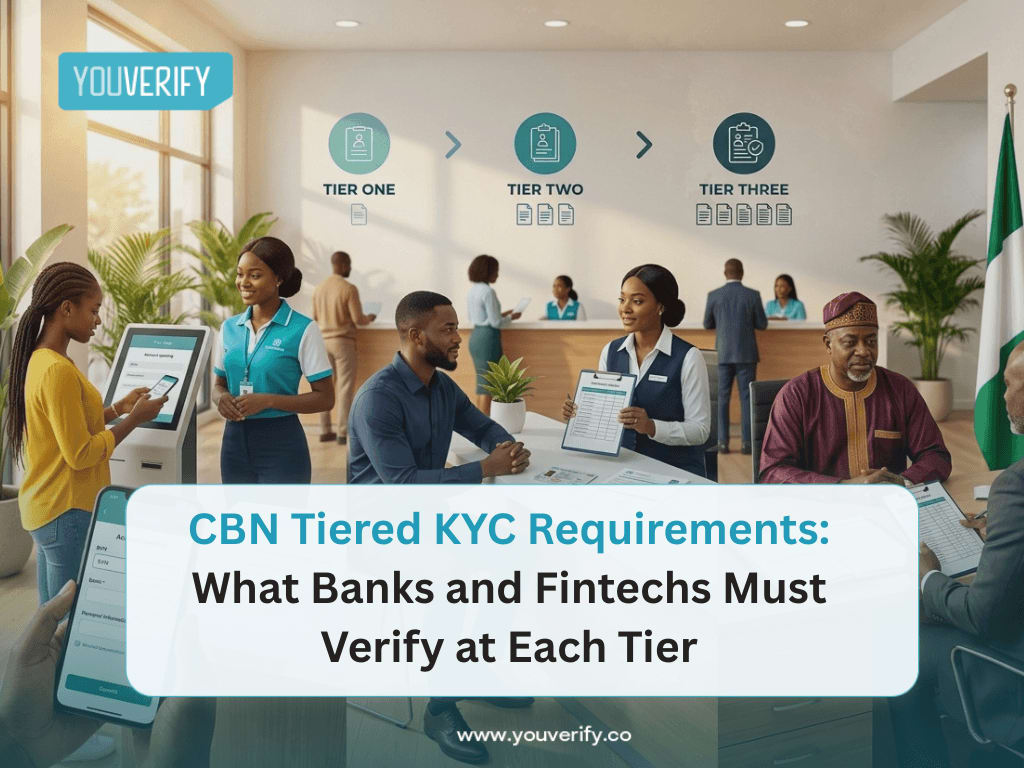
The CBN Customer Due Diligence Regulations, 2023 apply to every financial institution the Central Bank of Nigeria (CBN) supervises. The CBN's tiered KYC requirements link account limits to how deeply a customer is verified. The NDPA 2023 governs how eKYC data is collected, stored and shared.
eKYC in Kenya
Kenyan eKYC verifies customers against the Integrated Population Registration System (IPRS). Kenya is also moving to the Maisha Namba, a lifelong personal identifier introduced in 2023. The Proceeds of Crime and Anti-Money Laundering Act (POCAMLA) sets the core KYC duties.
Kenya remained on the FATF list of jurisdictions under increased monitoring after the October 2026 plenary. That makes strong, auditable eKYC especially important for Kenyan institutions.
eKYC in Ghana
Since July 1, 2022, the Ghana Card has been the only identification accepted for transactions at institutions the Bank of Ghana regulates. The Bank of Ghana's directive covers banks, payment service providers, electronic money issuers and other licensed institutions. eKYC in Ghana therefore centres on verifying the Ghana Card with the National Identification Authority (NIA), in line with the Anti-Money Laundering Act, 2020 (Act 1044).
eKYC in South Africa
South African eKYC operates under the Financial Intelligence Centre Act (FICA). Institutions verify customers against national identity records and must keep records that show how each identity was confirmed.
Benefits of eKYC
Speed is the most visible benefit. eKYC can verify low-risk customers in minutes, so customers don't need to visit a branch.
eKYC also lowers costs. Automated checks replace manual data entry and paper handling, which matters most for businesses onboarding customers at scale.
Accuracy improves because data is checked against official records rather than read by eye. Mismatches and duplicates are flagged automatically.
eKYC strengthens compliance. Every check is recorded, so audit trails are complete and consistent. It also supports financial inclusion by reaching customers far from bank branches.
Finally, eKYC scales. Digital checks handle sudden spikes in sign-ups without adding staff.
Is eKYC Safe?
eKYC is safe when it combines several layers of checks. Registry verification confirms the identity exists. Liveness detection confirms a real person is present. Document forensics catch tampered IDs.
The main risks are deepfake selfies, injection attacks that feed fake video into the camera stream and synthetic identities that mix real and invented data. Strong eKYC solutions use passive liveness detection, device intelligence and duplicate detection to stop them.
Data protection is the other key risk. Under the NDPA 2023, businesses need a lawful basis to process personal data and must protect it. Your eKYC provider is your data processor, so choose one with recognised security certifications.
How to Choose an eKYC Solution
Start with coverage. An eKYC solution should verify identity numbers directly with official registries in the countries you serve, not just read documents.
Next, check fraud defences. Ask how the provider detects deepfakes and injection attacks and how it links duplicate accounts.
Then check compliance fit. The solution should let you configure tiered checks, screen customers against sanctions and PEP lists and keep a full audit trail. For a detailed checklist, see our guide to choosing KYC software and our guide to digital onboarding solutions.
eKYC with Youverify
Youverify helps regulated businesses run eKYC they can defend. It verifies customers against 150+ official identity sources and 145+ business registries, with passive liveness detection against deepfakes, replays and injection attacks.
KYC, KYB, screening and risk scoring run as one workflow, on one customer record with one audit trail. Screening continues after approval, so customers are re-checked as their risk changes. Youverify holds SOC 2 Type II, ISO/IEC 27001:2022 and ISO/IEC 42001:2023 certifications.
See how 1,400+ businesses use Youverify for eKYC and real-time risk detection. Request a demo today.
FAQs
Frequently Asked Questions
eKYC means electronic Know Your Customer. It is the remote verification of a customer's identity using digital documents, official identity databases and biometric checks. Banks, fintechs and other regulated businesses use it to onboard customers without paper forms or branch visits.
The full form of eKYC is electronic Know Your Customer. The "e" shows that identity checks are carried out digitally, rather than through physical documents and face-to-face meetings.
KYC is the regulatory requirement to verify a customer's identity and assess their risk. eKYC is a digital way of meeting that requirement. It replaces paper documents and branch visits with online data capture, database verification and biometric checks.
Yes, when it uses several layers of protection. Safe eKYC verifies identity numbers against official records, uses liveness detection to confirm a real person is present and checks documents for tampering. Customer data must also be stored and processed in line with data protection laws such as the NDPA 2023.
Customers complete eKYC through the bank, fintech or service they are signing up with. They usually enter their details and national identity number, upload an ID document and take a selfie. The provider then verifies this information against official records.
Video KYC is a form of eKYC that verifies a customer through a live or recorded video session. An agent or automated system confirms the customer's identity and documents on camera. It is often used for higher-risk customers.
Yes. Electronic Know Your Business (KYB) checks verify a company against its official registry, such as the Corporate Affairs Commission (CAC) in Nigeria. They also identify its directors and ultimate beneficial owners, who are then verified and screened like individual customers.